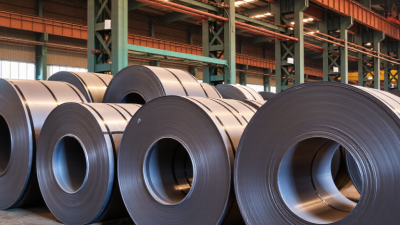
Buying Carbon Steel Plate Coil is not a simple price comparison. A low quotation can hide poor flatness, inconsistent thickness, weak traceability, or expensive processing losses. The right choice begins with the application, not the supplier’s first number.
Industry data shows why this decision matters. The World Steel Association reported approximately 1.89 billion tonnes of crude steel production worldwide in 2023. Its World Steel in Figures 2024 also highlights steel’s enormous role in construction, transport, energy, and manufacturing. The International Energy Agency estimates that the steel sector produces about 2.6 billion tonnes of direct carbon dioxide emissions annually. Carbon performance is becoming a purchasing issue, not merely a corporate slogan.
Edwin Basson, Director General of the World Steel Association, has stated, “Steel is essential to our everyday lives.” That simple point deserves practical attention. A coil may look uniform under warehouse lighting, yet its mill certificate, heat number, yield strength, and surface condition tell a different story. Check them carefully. Sometimes, buyers focus too heavily on the base price. That is a mistake.
This guide presents 10 practical tips for buying Carbon Steel Plate Coil. It considers grade selection, coil dimensions, tolerances, surface quality, documentation, supplier capability, delivery risk, and total cost. It also encourages buyers to question unclear specifications and verify sustainability claims through recognized data. No checklist is perfect. Real projects change, and purchasing decisions sometimes need revision. Careful verification remains the safer habit.
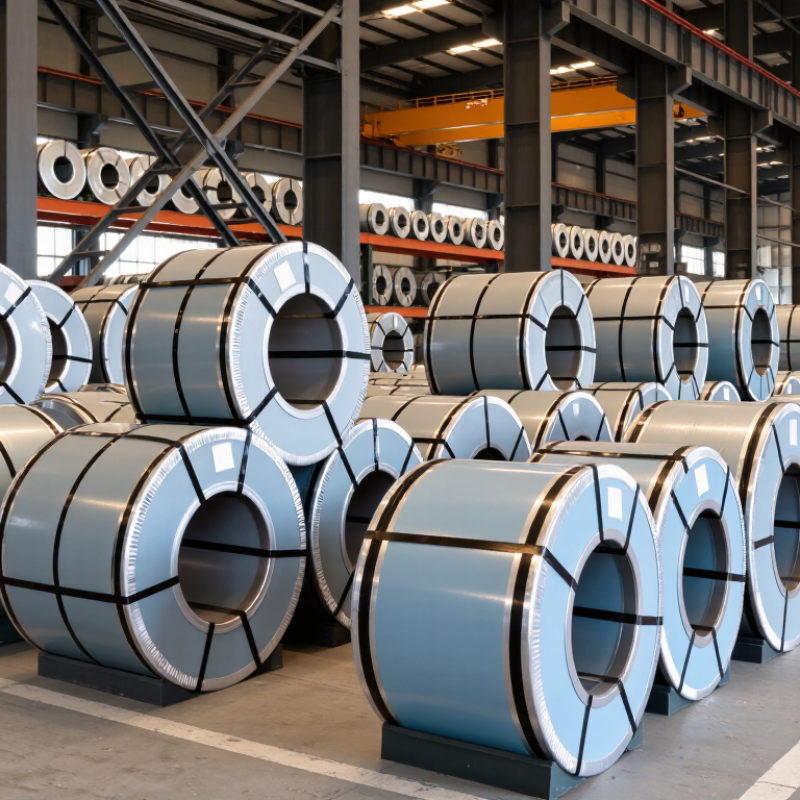
Before buying carbon steel plate coil, define the job, not just the grade. Confirm thickness, width, coil weight, inner diameter, outer diameter, edge condition, surface finish, and dimensional tolerances. A coil for laser-cut brackets differs from one for storage tanks or structural frames. ASTM A635/A635M provides relevant requirements for heavy-thickness hot-rolled carbon and structural steel coils.
Chemistry and mechanical properties must match fabrication. Check carbon content, yield strength, tensile strength, elongation, and impact requirements where applicable. ISO 6892-1 describes tensile testing methods for metallic materials. Ask for mill test certificates, heat numbers, test results, and traceability records. Small details matter.
World Steel Association reported approximately 1.89 billion tonnes of crude steel production in 2023. That scale does not guarantee suitable material. Production volumes are broad; your specification must remain exact. For forming, request suitable ductility and consistent thickness. For welding, review carbon equivalent and welding procedure needs. For outdoor service, consider corrosion protection and drainage design. I have seen buyers focus on price, then discover that coil weight exceeds their decoiler capacity. Measure the equipment first. Even a carefully written specification can miss packaging, transport limits, or actual cutting losses.
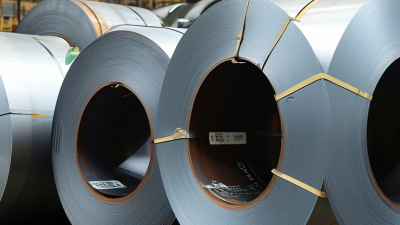
Choosing the correct steel grade is the foundation of a reliable carbon steel plate coil purchase. Start with the intended service: structural framing, pressure equipment, transportation, or general fabrication. A grade suitable for a warehouse beam may fail in a welded tank. Check yield strength, tensile strength, elongation, impact toughness, and carbon equivalent before comparing prices.
Standards must match the application and destination market. Common references include ASTM, EN, JIS, and ISO specifications, but their requirements are not interchangeable. Confirm the exact standard number, revision, thickness range, delivery condition, and required tests. For welded components, review weldability and heat-treatment requirements. For cold environments, specify impact testing at the correct temperature. Ask for a mill test certificate with heat number, chemical analysis, mechanical results, and dimensional records.
Details matter.
Inspect coil width, thickness tolerance, surface scale, edge condition, and flatness after decoiling. A lower-cost coil can create higher processing waste if trimming or leveling is excessive. One mistake I have seen is selecting a high-strength grade without checking forming equipment limits. That choice looked efficient on paper, yet produced cracks near tight bends. Recheck the purchase specification with the fabricator, inspector, and end-use engineer. Requirements sometimes conflict, and a short technical review can expose the gap before production begins. I would also verify whether the supplier’s test method matches the governing standard, because similar results do not always prove equivalent compliance.
When buying carbon steel plate coil, confirm dimensions before discussing price. Check thickness, width, coil weight, inner diameter, and outer diameter against the purchase specification. Measure twice. A small thickness variation can affect forming, welding, and final weight. Ask for the permitted tolerances, not only the nominal size. Confirm whether measurements were taken at the edge or center.
Surface quality deserves close inspection under good lighting. Look for rust, pitting, scratches, roll marks, edge cracks, and uneven trimming. Light oxidation may be removable, but deep pits reduce usable thickness. Check several points along the coil, because one clean section proves very little. Look closely. Packaging should also prevent moisture entry during transport and storage.
Mechanical properties must match the intended application. Review the mill test certificate for yield strength, tensile strength, elongation, hardness, and chemical composition. Compare every value with the required standard or fabrication drawing. Request independent testing when the coil will face heavy forming or safety-critical loads. A coil can meet strength requirements yet crack during bending if ductility is overlooked. This is an easy mistake. In practice, buyers sometimes focus on the certificate and skip physical sampling. That decision can be costly. Keep records of measurements, photographs, heat numbers, and inspection dates. Traceability makes disputes easier to investigate and helps confirm that the delivered coil matches the tested material.
Check coil dimensions, surface quality, and mechanical properties before placing an order. The chart compares representative minimum specified mechanical properties from widely used steel grades; exact values depend on the applicable standard and product thickness.
Buying checklist: Confirm the required grade, thickness, width, coil weight, dimensional tolerances, edge condition, surface cleanliness, rust or scale limits, chemical composition, mechanical test results, and material test certificate. Always verify thickness-specific requirements in the purchase standard.
Mechanical property values are representative minimum requirements in MPa: EN 10025-2 grades are shown for common thickness ranges, while ASTM A572 Grade 50 values follow its specified minimum requirements. Confirm the current edition of the applicable standard before purchasing.
10 Tips for Buying Carbon Steel Plate Coil
A reliable purchase starts with the supplier, not the lowest quotation. Check production experience, equipment, export records, and response speed. Ask for recent mill test certificates and independent inspection options. Certifications should match the required standard, such as ASTM, EN, or another agreed specification. ISO 9001 supports process control, but it does not guarantee every coil is perfect.
Check the heat number. It should connect the coil to chemical analysis, mechanical results, and production records. Confirm coil numbers appear on labels, packing lists, certificates, and invoices. Traceability should continue through slitting, recoiling, or surface treatment. Photos are not proof. Request sample documents before placing an order. Verify thickness, width, coil weight, surface condition, yield strength, tensile strength, and elongation. Add impact testing when service temperature requires it.
Quality controls deserve specific questions. How often are gauges calibrated? Who approves nonconforming material? Can the supplier provide inspection records, dimensional reports, and corrective-action evidence? During one purchasing review, a certificate looked complete, but the heat number differed from the packing label. It was a small error with serious implications. Suppliers may correct such mistakes, yet repeated mismatches suggest weak control. No process is perfect. Leave room for independent inspection, realistic tolerances, and clear claims procedures. A strong supplier welcomes these checks rather than treating them as distrust.
| No. | Buying Tip | What to Evaluate | Recommended Evidence or Benchmark | Questions to Ask the Supplier | Warning Sign |
|---|---|---|---|---|---|
| 1 | Define the exact material grade | Confirm the steel grade, delivery condition, thickness range, width, coil weight, and intended application before requesting quotations. | Use the applicable specification, such as ASTM A36 or ASTM A572 where applicable, or EN 10025 grades such as S275 or S355. The governing standard must be stated on the purchase order. | Which product standard and grade will appear on the mill test certificate and shipping documents? | A quotation lists only “carbon steel” without grade, standard, or delivery condition. |
| 2 | Verify supplier quality certification | Review whether the supplier operates a documented quality management system and whether the certificate is current and relevant to the supplied product. | Request a valid ISO 9001 certificate showing the certified scope, certificate number, issuing body, validity period, and surveillance status. ISO 9001 supports process control but does not replace product testing. | Can you provide the current certificate and explain which processes are covered by its certified scope? | An expired certificate, unclear scope, or certificate issued for unrelated activities. |
| 3 | Demand a complete mill test certificate | Check chemical composition, mechanical properties, product dimensions, heat number, standard, and authorized approval. | For many EN-based transactions, an EN 10204 Type 3.1 inspection certificate provides test results for the supplied product and confirmation by the manufacturer’s authorized inspection representative. | Will the certificate show actual test results rather than only nominal or guaranteed values? | A generic certificate is supplied without heat number, actual values, or product identification. |
| 4 | Check heat and coil traceability | Ensure each coil can be linked to its heat number, production record, test certificate, inspection status, and shipping documents. | The heat number should remain visible or electronically recorded from production through slitting, storage, loading, and delivery. Coil ID, net weight, gross weight, and dimensions should also match. | How is traceability maintained if the coil is processed, slit, repacked, or partially shipped? | Labels are handwritten, incomplete, duplicated, or inconsistent with the mill test certificate. |
| 5 | Review chemical composition controls | Confirm that carbon, manganese, phosphorus, sulfur, and any specified alloying elements meet the selected grade requirements. | Compare actual heat-analysis results with the limits in the applicable standard. Low phosphorus and sulfur limits are especially important where weldability, toughness, or forming performance is specified. | Are chemical analyses performed by heat, and can you provide the testing method or laboratory record? | Composition values are missing, rounded without limits, or do not match the quoted grade. |
| 6 | Validate mechanical properties | Check yield strength, tensile strength, elongation, and any impact or bend requirements required by the application. | Test values must satisfy the specified grade and thickness range. Test direction, specimen location, gauge length, and test temperature should be identified when required by the standard. | Are the results actual values for the supplied heat and thickness, and which test standard was used? | Only tensile strength is reported, while yield strength and elongation are omitted when required. |
| 7 | Control thickness, width, and shape | Evaluate thickness deviation, width tolerance, camber, flatness, edge condition, coil inside diameter, and outside diameter. | Agree on the applicable tolerance standard, such as ASTM A568/A635 where applicable or EN 10051 for continuously hot-rolled products. Acceptance limits must be stated in the purchase order. | Where and how often are dimensions measured, and will inspection records be supplied with the shipment? | The supplier promises “standard tolerance” without identifying the standard or measurement method. |
| 8 | Inspect surface and internal quality | Look for rust, scale, laminations, cracks, roll marks, dents, edge cracks, welds, and other defects that could affect fabrication or service. | Define an acceptable surface condition, inspection coverage, repair limits, and whether ultrasonic testing or other non-destructive testing is required for the application. | What inspection equipment and sampling plan are used, and how are nonconforming coils segregated? | The supplier cannot provide inspection criteria or treats visible defects as automatically acceptable. |
| 9 | Audit testing and nonconformance controls | Assess incoming-material inspection, calibration, laboratory competence, sampling frequency, corrective action, and control of rejected material. | Request sample inspection reports, calibration records, nonconformance reports, and corrective-action examples with confidential details removed. Testing equipment should be maintained and calibrated. | What happens when a coil fails a chemical, mechanical, dimensional, or surface requirement? | Failed material is reclassified or shipped without documented disposition and customer approval. |
| 10 | Compare total delivered cost and service | Compare material price together with testing, packaging, freight, duties, minimum order quantity, lead time, claims handling, and replacement policy. | Evaluate quotations on the same basis: grade, dimensions, tolerance, quantity, Incoterms, payment terms, documentation, delivery date, and inspection requirements. | What costs are excluded, and what is the documented process for shortage, damage, late delivery, or quality claims? | An unusually low price is offered by reducing inspection, documentation, packaging, or specification compliance. |
Request comparable quotations with the same grade, thickness, width, and quantity. A lower price may hide different tolerances or testing levels.
Check whether the quote includes cutting, inspection, certificates, and local handling. These small charges can change the final figure.
Ask how long the price remains valid. Steel prices can move before approval.
Compare payment terms carefully, not only the headline price.
Confirm the production schedule in writing.
Separate manufacturing time from shipping time. A supplier may quote seven days for production, while transport takes three weeks.
Ask about delay procedures and partial shipments.
In my experience, vague delivery wording creates more trouble than a slightly higher price. I once focused too heavily on unit cost and underestimated port storage fees. That mistake still influences my purchasing checks.
Examine the packaging specification. Confirm coil weight, edge protection, wrapping, labels, and moisture control. Poor packaging can cause rust, dents, or difficult unloading.
Match packaging to your warehouse equipment and lifting limits.
Calculate total purchase cost per usable tonne. Include freight, insurance, duties, unloading, inspection, storage, processing loss, and financing costs. A heavier coil may reduce handling expenses, but it could exceed your equipment capacity. Ask for photos of similar shipments when possible. Records are useful, though they do not replace a written agreement. Recheck every assumption before placing the order.