Choosing reliable Carbon Steel Mild Steel Coil suppliers is a practical decision with long-term consequences. The wrong source can create uneven thickness, delayed deliveries, and costly production adjustments. A low quotation may look attractive. It may hide weaker quality controls.
Experienced buyers examine more than price. They review coil grade, width tolerance, surface condition, yield strength, and available thickness ranges. Relevant standards, such as ASTM or EN specifications, should match the intended application. Mill test certificates must identify chemical composition and mechanical properties clearly. Traceability matters when each coil carries a heat number, production date, and inspection record.
Supplier capability should also be tested through evidence. Ask for recent inspection reports, production photographs, packaging details, and references from comparable industries. A dependable supplier explains its corrective action process when defects appear. It should also communicate realistic lead times, export documentation, and safe storage requirements. Certifications can support credibility, but certificates alone do not guarantee consistent performance.
Details reveal competence.
A site visit, independent inspection, or small trial order can reduce uncertainty. Still, no evaluation is perfect. Even a respected mill may experience shipment delays or temporary quality issues. Buyers should record these risks instead of assuming promises will always hold. Comparing technical evidence, communication quality, and after-sales responsibility creates a more balanced decision. The best supplier is not always the cheapest one. It is the partner that delivers suitable Carbon Steel Mild Steel Coil consistently, transparently, and with verifiable quality.
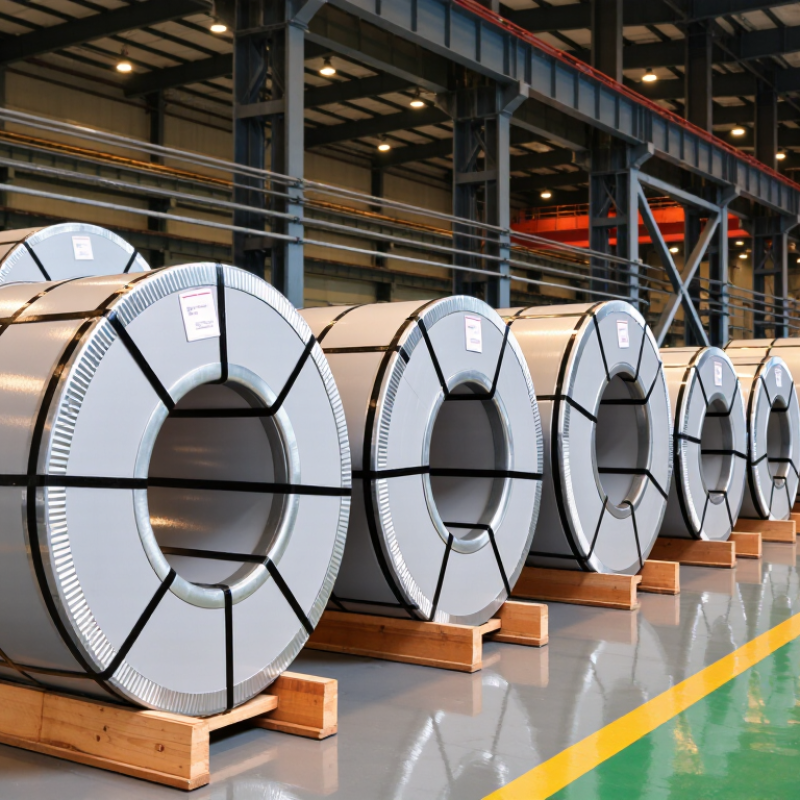
Before comparing carbon steel mild steel coil suppliers, define the job the coil must do. Record the required grade, thickness, width, and coil weight. Include tolerances, too. A coil intended for stamped brackets may need different properties from one used for formed panels. If the end use is still unclear, pause and confirm it with your design or production team.
Describe the processing conditions, not just the finished part. Will the steel be cut, bent, welded, or painted? Note the minimum bend radius, forming direction, and any surface requirements. For example, a visible panel may need a cleaner finish than an internal support.
Be specific. “Good quality” tells a supplier very little. Ask what mill certificates and test data are available, and check that they match the requested grade and dimensions.
Practical details matter. Estimate monthly demand, preferred delivery schedule, and acceptable packaging. State whether coils need edge protection or moisture-resistant wrapping during transport. Confirm the core diameter and handling limits if your equipment has restrictions. Small omissions can cause delays. I have seen teams focus on price, then discover that a coil is too heavy for their uncoiler. That is an easy assumption to miss, and it deserves a second look. When requirements are documented clearly, supplier quotations become easier to compare and less likely to hide costly differences.
When choosing carbon steel mild steel coil suppliers, verify credentials before discussing price. Ask for business registration, quality management certificates, and recent inspection reports. Check that certificate details match the supplier’s legal name and production site. A polished brochure is not proof. Request references from buyers handling similar coil grades and thicknesses, then confirm delivery performance directly where possible.
Production capability should be demonstrated with specific records. Ask for mill test certificates, sample coil labels, and inspection data showing grade, thickness tolerance, width, and mechanical properties. Confirm the supplier can maintain those specifications across the quantity you need, not just on one sample. A visit, video walkthrough, or independent inspection can reveal practical details, such as coil storage conditions and how batches are identified. Even small handling marks matter when the coil will be processed further.
Be precise about what you need: grade, dimensions, surface condition, packaging, and test requirements. Compare the supplier’s stated capacity with recent orders and lead times. Some answers may sound confident but remain vague; ask for documents rather than assurances. I would still leave room for uncertainty. A single report cannot guarantee every shipment, so agree on inspection points and traceability before production begins.
Check supplier credentials and production capabilities before requesting a quotation.
Suggested evaluation emphasis on a 1–5 scale, not supplier ratings or an industry benchmark. Verify applicable quality certifications, material test certificates, grade and dimensional compliance, production capacity, and inspection procedures against your requirements.
Choosing carbon steel mild steel coil suppliers starts with the grade, not the quoted price. “Mild steel” is a broad description, not a complete specification. Compare the required chemistry, yield strength, thickness tolerance, surface finish, and intended forming process. Standards such as ASTM A1008/A1008M and EN 10130 cover different product requirements; similar grade names do not guarantee direct equivalence. Check the standard and edition stated on the mill test certificate.
Ask for heat-specific certificates and verify that coil numbers match the documents and shipping labels. Reliable controls include chemical analysis, tensile testing under ISO 6892-1, and recorded checks of thickness and width. Small differences matter: a coil that varies across its width can wrinkle during stamping.
World Steel Association data reports global crude steel production of about 1.88 billion tonnes in 2024. That scale makes documented traceability especially useful; volume alone, however, says little about an individual coil’s consistency.
Request recent inspection records, sampling details, and the supplier’s process for handling nonconforming material. Compare results against the purchase specification, not a verbal assurance. It is tempting to treat a certificate as proof of every coil’s condition. It is not. Ask how samples were selected, whether surface defects are recorded, and how claims are resolved.
A practical trial coil can expose issues that paperwork misses, though it adds time and cost.
When comparing carbon steel mild steel coil suppliers, look beyond the quoted price. Ask whether it includes coil slitting, edge protection, packaging, and freight. A low price can change once handling fees appear. Request a written quotation with the coil thickness, width, grade, weight tolerance, and validity period clearly stated. Compare like with like. Even small differences in specifications can affect both cost and production fit.
Lead times need the same careful check. Ask whether the coils are in stock or require production, and request a realistic dispatch date. For recurring orders, confirm how much notice the supplier needs and whether partial shipments are possible. A delivery estimate is not a guarantee, so allow extra time for unloading and inspection. I have found that a few days of buffer can prevent a line from waiting on one delayed truck. I may be overly cautious, but missed schedules are expensive.
Tips: Confirm the delivery address, unloading equipment, vehicle access, and preferred delivery window before ordering. Ask for tracking updates and packaging details, such as moisture barriers and coil restraints. Keep the answers in writing. Small details matter.
Verify Samples, Documentation, and Contract Terms
Ask for a sample cut from the actual coil lot, not a handpicked display piece. Check thickness at several points with a calibrated micrometer, then inspect the edge, surface, and mill scale. Compare the results with the purchase specification. A smooth sample proves little if its heat number cannot be traced to the delivered coil. World Steel Association’s World Steel in Figures 2024 reports global crude steel production of 1,892.2 million tonnes in 2023. At that scale, consistent lot identification matters. Request a mill test certificate showing heat number, grade, dimensions, and chemical and mechanical results. For sheet products, confirm the agreed standard, such as ASTM A568/A568M, where applicable.
Read the paperwork closely. An EN 10204 type 3.1 inspection certificate, when specified, links test results to the manufacturer’s inspection process; it is not a substitute for checking the material on arrival. Match certificate numbers to coil tags and packing lists. Put tolerances, coil weight, delivery dates, packaging, and claims procedures in the contract. Specify what happens if measured thickness or surface quality falls outside agreed limits. Small omissions become expensive.