Inquiry
Form loading...

What Is Coil Carbon Steel Used For?

Coil Carbon Steel is a practical foundation for modern manufacturing. It is supplied in continuous coils, allowing producers to cut, form, weld, and coat large quantities efficiently. You can find it in automotive panels, roofing sheets, storage tanks, structural components, pipes, appliances, and industrial machinery. Its value comes from a useful balance of strength, formability, availability, and cost.

Edwin Basson, Director General of the World Steel Association, has described steel as “an essential part of our everyday lives and a critical enabler for a sustainable future.” That view fits Coil Carbon Steel closely. Its applications depend on carbon content, thickness, surface treatment, mechanical properties, and the forming process. Low-carbon grades usually support bending and deep drawing. Higher-carbon grades can provide greater hardness and wear resistance, although they may become less forgiving during fabrication.

The answer is not always simple. A coil that performs well for roofing may fail in a demanding automotive application. Humidity, salt exposure, temperature changes, and repeated loading can alter the correct material choice. Buyers should examine mill certificates, coating specifications, tolerances, and testing records before placing an order. Small details matter. A thin edge crack can expand during stamping. Poor storage can create rust before production begins.

This guide explains what Coil Carbon Steel is used for, how manufacturers select suitable grades, and where its limitations appear. It also considers cost, durability, processing efficiency, and responsible material use. Some choices remain imperfect. That is why real performance data should guide every final decision.

What Is Coil Carbon Steel Used For?

Definition and Basic Characteristics of Coil Carbon Steel

What Is Coil Carbon Steel Used For?

Coil carbon steel is flat, carbon-based steel rolled into a continuous coil. The coil is a delivery form, not a separate steel grade. Its performance depends on carbon content, thickness, rolling method, and surface treatment. Hot-rolled coil usually has a rougher surface and wider thickness options. Cold-rolled coil offers tighter dimensions and a smoother finish.

Carbon steel is valued for strength, availability, and practical forming performance. Lower-carbon grades are easier to bend, stamp, and weld. Higher-carbon grades can provide greater hardness, but forming becomes more difficult.

This balance matters in construction panels, vehicle components, storage racks, pipes, machinery parts, and fabricated frames. In real production, small differences in thickness can affect bending accuracy and weld quality.

Tips: Check the grade, thickness, coil weight, and surface condition before ordering. Confirm whether the material will be painted, galvanized, cut, or welded. Protect untreated coil from moisture, because rust can begin at edges and scratches. Do not assume a shiny surface means better performance. That assumption often fails. A coil suitable for deep forming may be unsuitable for heavy wear. Reviewing the mill certificate and testing a sample can prevent costly mistakes.

How Coil Carbon Steel Is Manufactured and Processed

What Is Coil Carbon Steel Used For?

How Coil Carbon Steel Is Manufactured and Processed

Coil carbon steel begins with iron-bearing materials, recycled scrap, and controlled carbon additions. Mills produce molten steel in basic oxygen or electric arc furnaces. Continuous casting then forms a thick slab. This stage demands strict temperature control. Small errors can create cracks, segregation, or uneven mechanical properties.

The slab enters a hot-strip mill, where rotating rolls reduce its thickness at high temperatures. Water sprays control cooling and final strength. The World Steel Association reported 1.892 billion tonnes of global crude steel production in 2023. That scale explains why small process improvements matter. After coiling, pickling removes oxide scale with an acid solution. Cold rolling can further reduce thickness and improve surface quality. Annealing restores ductility after heavy deformation. Temper rolling then improves flatness and appearance.

Processing does not end at the mill. Slitting machines divide wide coils into narrower strips. Leveling equipment corrects waves and edge distortion. Inspectors check thickness, surface defects, tensile strength, and coil weight. Some errors remain difficult to detect. A clean surface may hide internal stress. The International Energy Agency estimates steelmaking creates about 8% of global energy-related emissions. Therefore, furnace efficiency, scrap use, and lower-carbon electricity increasingly shape production decisions. Finished coils support automotive panels, construction frames, pipes, machinery, and storage equipment. Each application needs a different balance of strength, formability, weldability, and corrosion protection.

What Is Coil Carbon Steel Used For?

Carbon steel coil is widely processed into sheets, strips, tubes, structural parts, vehicle components, appliances, machinery, and packaging products. The chart shows approximate global finished-steel demand by major end-use sector.

The percentages are rounded industry-level estimates and may vary by region and year. Carbon steel coil is commonly manufactured through reheating, hot rolling, coiling, pickling, cold rolling, annealing, and final finishing.

Major Industrial Uses of Coil Carbon Steel

What Is Coil Carbon Steel Used For?

Major Industrial Uses of Coil Carbon Steel

Coil carbon steel supports construction, transport, machinery, and everyday appliances. The World Steel Association reported about 1.89 billion tonnes of crude steel production in 2023. That scale reflects steel’s central industrial role. Hot-rolled coil commonly becomes beams, frames, pipes, storage racks, and heavy equipment parts. Its strength and relatively low cost suit bridges, warehouses, and agricultural machinery. However, surface finish can be limited. Additional processing is often necessary.

Cold-rolled coil offers tighter thickness control and a smoother surface. Manufacturers use it for vehicle panels, appliance housings, office furniture, drums, and precision components. Galvanized coil adds zinc protection for roofing, wall panels, HVAC ducts, and outdoor structures. The International Energy Agency notes that steel production creates roughly 7–9% of global energy-related emissions. Therefore, material efficiency matters. Thinner gauges can reduce weight, but excessive reduction may weaken a formed part. This trade-off deserves more attention than simple price comparisons.

Tips: Match the coil grade to forming, welding, load, and exposure conditions. Check mill certificates, thickness tolerances, coating mass, and edge quality before production. Store coils on dry supports, away from standing water. A small rust mark may become a costly rejection later. Buyers should also compare total processing costs, not only the coil’s purchase price. Recycled content can improve sustainability, but supply consistency and verified data still need careful review.

Key Advantages and Limitations in Practical Applications

What Is Coil Carbon Steel Used For?

Coil carbon steel is widely used for automotive panels, roofing sheets, storage tanks, ducts, and structural components. Its continuous form supports high-speed cutting, stamping, slitting, and roll forming. This improves production consistency and reduces material waste. Lower carbon grades bend easily, while higher carbon grades offer greater hardness and wear resistance. The choice depends on thickness, strength, forming depth, and welding requirements.

Its main advantage is practical efficiency. Steel coils are easy to transport, store, and process in large volumes. They also provide predictable mechanical performance when supplied with proper mill certificates and inspection records. However, carbon steel has clear limitations. Unprotected surfaces can rust quickly in humid, salty, or chemically aggressive environments. It may also distort during welding if heat input is poorly controlled. High-strength grades can resist forming more than expected. That mistake costs time.

Tips: Check the grade, thickness, surface condition, and coil weight before production. Confirm the forming radius with a trial piece. Store coils above damp floors and protect cut edges. A temporary oil film may help, but it cannot replace a suitable coating system. Inspect weld zones after fabrication, especially where heat distortion could affect alignment.

Carbon steel is not automatically the best low-cost option. Coating, maintenance, and replacement risks can change the total cost. Engineers should compare service conditions, processing limits, and expected lifespan before selecting a coil. Supplier documentation matters, but independent verification is still worthwhile.

Factors for Selecting the Right Carbon Steel Coil

What Is Coil Carbon Steel Used For?

Factors for Selecting the Right Carbon Steel Coil

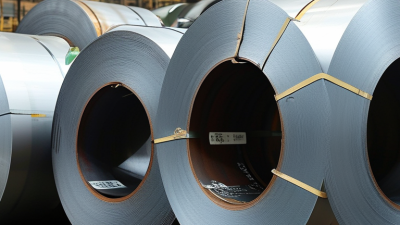
Carbon steel coil supports construction, automotive parts, appliances, pipes, and general fabrication. Its appeal is practical: strong performance, broad availability, and relatively simple processing. The World Steel Association reported about 1.89 billion tonnes of crude steel production in 2023. Construction consumed roughly half of global steel demand, showing why coil selection matters across many projects.

Start with the required grade, thickness, width, and surface condition. Low-carbon steel usually suits formed panels and light fabrication. Medium-carbon grades offer greater strength but may resist bending. Check yield strength, tensile strength, elongation, and chemical limits in the material certificate. ASTM, EN, and ISO specifications can support consistent purchasing, but they are not interchangeable automatically. A mill certificate deserves careful review.

Production method also changes the decision. Hot-rolled coil works well for structural parts and heavy components. Cold-rolled coil provides tighter dimensions and a smoother surface. Galvanized coil adds zinc protection where moisture is expected. The U.S. Geological Survey’s Mineral Commodity Summaries highlights steel’s dependence on iron ore, scrap, energy, and processing capacity, which can influence supply and pricing.

Think about the next operation. Will the coil be stamped, welded, painted, or slit? A stronger grade may reduce thickness, yet it can increase forming problems. That trade-off is easy to underestimate. Cost per tonne is useful, but cost per finished part is better. Trial samples, inspection data, and realistic forming tests often reveal issues that a specification sheet misses. There is no perfect coil.