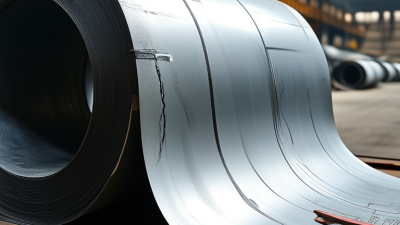
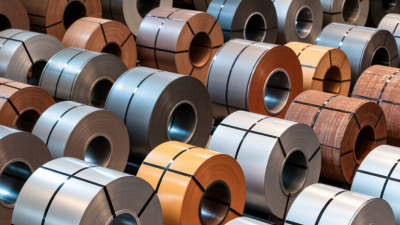
Buying black steel coil is a specification decision, not just a price comparison. Carbon Steel Coil Black may arrive with an oily surface, mill scale, or a finish suited to further processing. Those details affect storage, cutting, welding, and paint preparation. A low quotation can look attractive until extra cleaning or rejected material changes the real cost.
A responsible introduction should not invent an expert’s name or quotation. No verifiable, topic-specific expert statement was provided, so this guide avoids presenting a fabricated quote as fact. Buyers can still start with practical checks: confirm grade, thickness, width, coil weight, and dimensional tolerances. Request the mill test certificate and compare it with the purchase specification. Ask how the coil was packed and protected; rust at an exposed edge can reveal poor handling before the full coil is unwrapped.
Look closely. Check sample photos or inspect the material under clear lighting. Surface scale can be normal, but deep pitting, dents, and uneven edges may disrupt production. Clarify whether the quoted surface condition matches your process. A detail that seems minor on a purchase order may become costly on the shop floor. These seven tips will help buyers ask sharper questions, compare offers fairly, and recognize where a supplier’s assurance needs evidence. Even careful buyers can miss something; a written checklist helps.
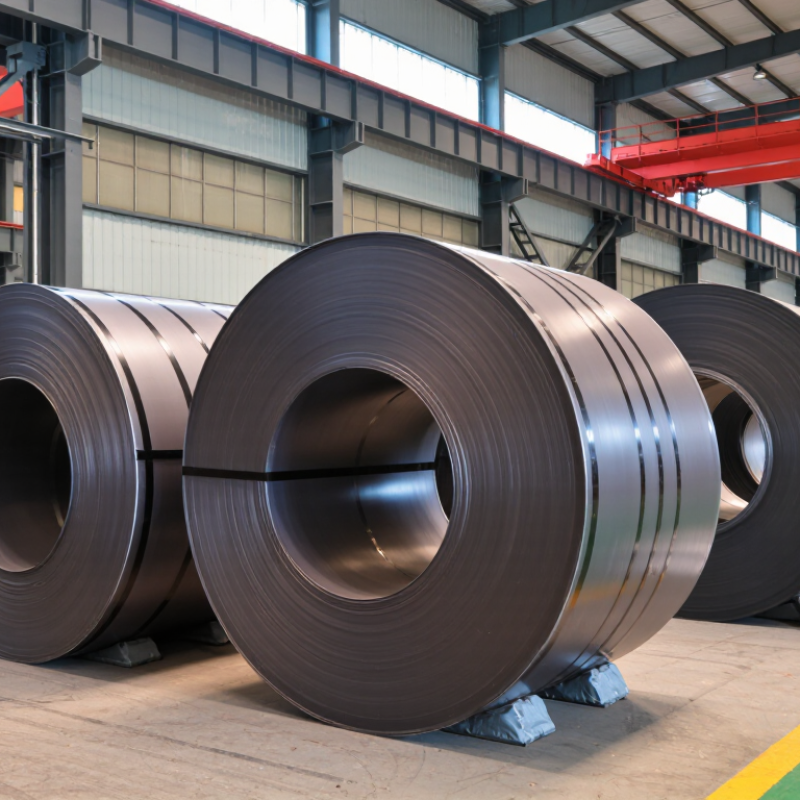
Black carbon steel coil is commonly hot-rolled steel with a dark iron-oxide layer called mill scale. It is supplied in coils for efficient storage and continuous processing. The surface is not a decorative finish. That distinction is easy to miss. Depending on grade and thickness, manufacturers use it for welded pipe, brackets, machinery frames, vehicle components, and storage tanks. Parts exposed to moisture usually need suitable coating or further surface treatment.
The World Steel Association reported global crude steel production of 1,882.6 million tonnes in 2024. This figure describes the broad steel industry, not black coil alone, but it shows the scale of steel supply. For buyers, the useful details are closer to the shop floor: coil thickness affects forming, while scale and surface variation can affect cutting, welding, and paint preparation. A coil that looks uniform at the edge may still need inspection across its width.
Buying tips: Confirm the steel grade and applicable standard; specify thickness and width tolerances; check coil weight and inner diameter against your equipment; request mechanical-property documentation; inspect edges and surface condition; clarify scale removal or coating needs; and match the order to your cutting and forming process. Ask how defects are handled. Small differences matter. A mill certificate helps, but it does not replace checking the delivered coil against the purchase specification.

Define the service before selecting a grade. Will the coil be stamped, bent, welded, or used for a structural part? Match the grade to the forming method and required strength, using the applicable standard and exact grade designation. If weldability or chemistry matters, state those requirements in the purchase specification. Do not assume that “black carbon steel” identifies one consistent grade; it does not.
Tip: Specify thickness, width, and tolerances together. Confirm whether thickness is nominal and check the permitted variation, especially when parts must fit closely. Width should suit the cutting line and finished component, while leaving room for edge trimming if needed. A few millimeters can matter. I have seen price comparisons overlook tolerance; that can create extra scrap later.
Set coil weight around the equipment and handling plan. Check the line’s capacity, lifting limits, coil inner diameter, and storage space before ordering. A heavier coil may reduce changeovers, but only if the uncoiler can handle it safely. Provide target and maximum weights, not just an approximate figure. Review the supplier’s specification and inspection documents against the order, including grade, dimensions, and measured weight. One detail is easy to miss: confirm whether quoted weight means net steel or gross shipment weight.
Black carbon steel coil can look sound under warehouse lighting and still hide scale, edge cracks, dents, or uneven thickness. Inspect the outer wraps in angled light, then check exposed edges for splitting and burrs. A small dent matters. Note rust and handling marks separately; they can signal storage problems, but do not prove the steel’s condition throughout the coil. Measure thickness at the left edge, center, and right edge, and check width and camber against the purchase order. ASTM A568/A568M provides dimensional-tolerance tables that vary by product form and ordered dimensions, so one generic tolerance is not enough. I would not trust a single gauge reading. It is an easy shortcut, and a weak one.
Match the coil ID and heat number to the mill test certificate, then confirm the stated grade, chemistry, and mechanical properties. ASTM A1011/A1011M covers hot-rolled carbon steel sheet and strip requirements; ASTM E8/E8M describes tensile testing. These references help buyers verify what the records actually measure. Check that the certificate lists test results, not just “compliant,” and ask for clarification when fields are missing or inconsistent. Keep photos, measurement locations, instrument details, and document revisions with the receiving record. A tidy file helps. It does not replace inspection. If readings approach the ordered limit, repeat them with a calibrated instrument and document the result before accepting the coil.
Check surface condition, dimensional tolerances, and quality records before accepting a coil. The chart shows illustrative thickness and width readings from a hypothetical incoming-coil inspection; confirm acceptance limits against your purchase specification.
Seven checks: inspect for rust, pits, scratches, and edge damage; verify thickness; measure width; check flatness and edge condition; confirm coil ID and weight; review the mill test certificate and inspection records; and match all results to the agreed specification.
Illustrative readings: nominal thickness 1.50 mm and nominal width 1,250 mm. Deviation is calculated as (measured − nominal) ÷ nominal × 100. Tolerances vary by specification.
Buying black carbon steel coil requires more than comparing quoted prices. Supplier capability affects consistency, delivery, and the cost of correcting defects. Ask about coil width and thickness tolerances, edge condition, and available inspection records. A capable supplier should explain how it controls these points, not just promise quality. Ask for proof. Review a recent inspection report and confirm that the stated grade matches your drawing and application.
Tip 1: Compare capability with your actual needs. Request sample documents for material certificates, packing details, and production lead times. If coils need slitting or special packaging, check whether those services are handled in-house or through another party. That distinction can affect scheduling and complicate claims. It is easy to miss.
Tip 2: Compare landed cost and purchase terms, not only price per ton. Check whether quotes include packing, freight, inspection, and cutting charges. Confirm minimum order quantity, payment milestones, shipment window, and the process for reporting dimensional or surface issues. Small details matter. Ask how price changes are handled if shipment dates or specifications change. Keep agreed tolerances and remedies in writing. A very low offer can be reasonable, but unexplained gaps deserve a second look.
When buying black carbon steel coil, match the order to a named grade and applicable standard. ASTM A1011 or A1018 may apply to hot-rolled sheet and strip, depending on product and thickness. Confirm the standard, grade, thickness, width, tolerances, and surface condition on the order and mill test certificate. Check that the certificate’s heat number matches the coil tag. Check the edges. Burrs, telescoping, or crushed turns can create handling and processing problems.
Specify packaging before shipment, not after production. Ask for a moisture-resistant wrap, protected edges, secure bands, and a coil eye orientation suited to your unloading equipment. State whether the coil must arrive eye-to-sky or eye-to-wall, and confirm the skid or saddle supports its weight. ISO 780:2015 provides handling symbols for distribution packages; use clear marks where relevant. Small details matter. Still, packaging descriptions can be vague, so request photos of a representative packed coil and agree on acceptable condition.
Delivery terms should spell out coil weight and dimensions, loading method, appointment window, unloading responsibility, and damage-reporting procedure. UNCTAD’s Review of Maritime Transport 2024 reports that maritime trade grew 2.4% in 2023, but that broad figure cannot predict an individual shipment’s arrival. Dates can slip. Build in a realistic receiving window, and ask for dispatch updates plus the carrier’s contact details. Before signing receipt, photograph the packaging, coil tags, and any visible impact marks.