Choosing a reliable supplier matters when buying Carbon Steel Coil Hot Rolled for demanding industrial work. Coil quality affects forming, welding, machining, and service life. A small defect can create costly production delays.
This guide examines seven leading suppliers through practical purchasing criteria. We consider steel grades, coil thickness, width tolerance, surface condition, yield strength, and production capacity. We also review mill certifications, inspection reports, heat numbers, and delivery performance. These details help buyers compare more than attractive prices. They also reveal whether a supplier can support repeat orders, custom specifications, and urgent replenishment.
Steel industry leader Lakshmi Mittal once said, “Steel is the backbone of modern industry.” His statement reflects the material’s central role in construction, automotive manufacturing, energy, and heavy equipment. However, reputation alone is not enough. Buyers should request test certificates, confirm applicable standards, and inspect packaging before shipment. Rust stains, damaged edges, or unclear labeling deserve attention. Small signals matter.
No supplier is perfect. Some offer excellent volume capacity but limited customization. Others provide flexible service but longer lead times. This comparison recognizes those trade-offs instead of presenting a simplistic ranking. The strongest candidates combine consistent chemistry, controlled rolling, dependable logistics, and responsive technical support. Real purchasing experience also matters. A supplier that answers quickly after a quality concern may be more valuable than one offering the lowest quotation. Readers should use this overview as a starting point, then verify specifications against their own project requirements.
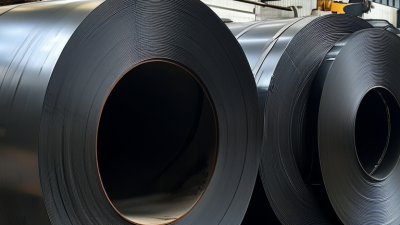
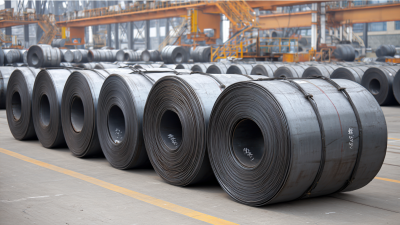
Hot rolled carbon steel coil is flat steel rolled at temperatures above its recrystallization point. The heat makes the slab easier to shape through repeated rollers. It then cools into a large, flexible coil.
Carbon steel mainly contains iron and carbon, with small amounts of elements such as manganese or silicon. Its carbon level strongly affects hardness, weldability, and formability. Higher carbon can improve strength, but it may make welding more demanding. The surface usually carries a dark oxide layer called mill scale. Its finish is rougher than cold rolled steel, and its dimensions may vary slightly more.
The scale is important.
The World Steel Association reported 1,892.9 million tonnes of crude steel production in 2023. This figure shows the enormous industrial scale behind hot rolled products. Industry buyers commonly select these coils for structural parts, pipes, automotive components, machinery frames, and general fabrication. However, “carbon steel” is not one universal grade. Thickness, yield strength, chemistry, edge condition, and coil weight must match the application. A simple mistake here can create unnecessary cutting loss or welding problems.
Tips: Confirm the required standard before ordering. Check mill test certificates, surface condition, thickness tolerance, and coil inner diameter. For outdoor storage, keep coils dry and raised above the floor. Do not assume visible mill scale guarantees corrosion protection; it does not.
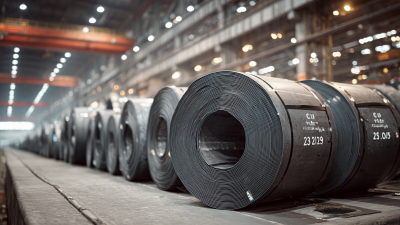
How to Evaluate Hot Rolled Carbon Steel Coil Suppliers
A credible supplier should provide more than a competitive price. Ask for the mill name, heat number, production date, and complete mill test certificate. The certificate should show chemical composition, yield strength, tensile strength, elongation, thickness, width, and coil weight. Compare these values with the required ASTM, EN, or JIS specification. World Steel Association data reports global crude steel production at about 1.89 billion tonnes in 2023. This scale makes traceability essential, not optional. Request a sample certificate before placing a trial order.
Inspect quality controls closely. Ask whether the supplier checks surface defects, edge cracks, camber, flatness, and dimensional tolerance after rolling. Photos of actual coils can reveal rust, telescoping, poor strapping, or damaged edges. A reliable supplier should explain inspection frequency and corrective-action procedures. I would also verify production capacity against your delivery schedule. A low quotation means little if the supplier cannot maintain stable monthly output. Delivery records matter.
Sustainability deserves practical verification. The International Energy Agency estimates steelmaking creates roughly 7% to 9% of global energy-related carbon dioxide emissions. Ask for energy, emissions, recycled-content, and wastewater data, preferably supported by an independent audit. Certificates alone can mislead. I have seen evaluations focus too heavily on paperwork and overlook inconsistent thickness between coils. That is an avoidable mistake. Check references, order a small batch, and test it independently before approving long-term supply.
| Supplier Profile | Typical Product Range | Common Carbon Steel Grades | Applicable Standards | Typical Coil Weight | Quality Documentation | Production & Delivery Capability | Export Suitability | Best Fit | Evaluation Score |
|---|---|---|---|---|---|---|---|---|---|
| Supplier 1 Integrated Mill |
Thickness: 1.5–25 mm Width: 900–2,000 mm |
Commercial quality, drawing quality, structural grades, weathering-grade options | ASTM A36, ASTM A572, ASTM A588, EN 10025, EN 10051 | 15–30 metric tons | Mill test certificate, heat number traceability, chemical and mechanical test results | High-volume production; continuous rolling; standard orders commonly planned in 3–8 weeks | Strong suitability for vessel, rail, construction and heavy fabrication projects | Large recurring orders | 9.3 / 10 |
| Supplier 2 Export-Oriented Mill |
Thickness: 1.2–20 mm Width: 1,000–1,800 mm |
Commercial quality, structural steel, low-carbon sheet and coil grades | ASTM A36, ASTM A1011, EN 10025, JIS G3101 | 10–28 metric tons | Mill test certificate, third-party inspection option, packing and marking records | Regular export scheduling; typical production and dispatch cycle of 4–9 weeks | Suitable for containerized and break-bulk shipments with standard export packaging | International distributors | 9.1 / 10 |
| Supplier 3 Automotive-Grade Producer |
Thickness: 1.0–6.0 mm Width: 900–1,850 mm |
Low-carbon deep-drawing grades, bake-hardening grades, automotive structural grades | ASTM A1008, EN 10130, EN 10268, JFS A2001 | 8–25 metric tons | Surface inspection, dimensional reports, mechanical testing, coil traceability | Tight process control; narrower thickness and flatness tolerances; usually 5–10 weeks | Best for manufacturers requiring consistent forming and surface quality | Automotive components | 9.0 / 10 |
| Supplier 4 Construction Steel Specialist |
Thickness: 2.0–16 mm Width: 1,000–2,000 mm |
Structural carbon steel, general-purpose hot rolled coil, high-strength low-alloy options | ASTM A36, ASTM A572 Grade 50, EN 10025 S235/S355, JIS G3106 | 12–27 metric tons | Mill test certificate, yield and tensile strength data, impact test where specified | Flexible batch planning; commonly 3–7 weeks for standard structural grades | Appropriate for beams, fabricated sections, storage tanks and general construction | Construction fabricators | 8.8 / 10 |
| Supplier 5 Service-Center Supplier |
Thickness: 1.5–12 mm Width: 600–2,000 mm Slit coils available |
Commercial quality, pickled-and-oiled coil, structural and forming grades | ASTM A1011, EN 10051, EN 10111, JIS G3131 | 3–25 metric tons | Supplier MTC, dimensional inspection, coating or oiling records where applicable | Shorter lead times for stocked material; custom processing commonly adds 1–3 weeks | Useful for regional buyers needing small lots, slitting or rapid replenishment | SMEs and service centers | 8.6 / 10 |
| Supplier 6 Heavy-Plate Rolling Specialist |
Thickness: 4.0–30 mm Width: 1,200–2,500 mm |
High-strength structural grades, pressure-vessel-related grades, shipbuilding grades | ASTM A572, ASTM A516, EN 10025, EN 10028, selected marine standards | 18–35 metric tons | Heat treatment records, impact testing, ultrasonic testing when required, full MTC | Longer production planning for heavy gauges; commonly 6–12 weeks | Suitable for heavy fabrication, energy infrastructure and transport equipment | Heavy engineering projects | 8.5 / 10 |
| Supplier 7 Regional Stocking Distributor |
Thickness: 1.5–20 mm Width: 900–2,000 mm Stock and cut-to-length options |
Commercial quality, structural grades, pickled-and-oiled hot rolled coil | ASTM A36, ASTM A1011, EN 10025, JIS G3101 | 2–25 metric tons | Original mill certificate, receiving inspection, dimensional and surface-condition reports | Fast availability for stocked sizes; replenishment typically 2–6 weeks | Good for urgent orders, mixed sizes and local or regional delivery | Short lead-time purchases | 8.3 / 10 |
Evaluation criteria include grade coverage, dimensional range, traceability, testing documentation, production capacity, delivery reliability, export readiness and suitability for the intended application. Buyers should confirm current specifications, availability, certificates and commercial terms before placing an order.
The seven best hot rolled carbon steel coil suppliers are not chosen by price alone. They are measured by production control, traceability, delivery stability, and technical support. The strongest options include integrated steel mills, electric arc furnace producers, regional coil manufacturers, export-focused mills, certified service centers, contract rolling facilities, and stockholding distributors. Each serves a different purchasing need.
Global crude steel production reached about 1.88 billion tonnes in 2024, according to the World Steel Association. This scale creates choice, but also uneven quality. The OECD Steel Outlook reports that global excess capacity may approach 630 million tonnes by 2026. Buyers should therefore inspect mill utilization, shipment history, and inventory age. A low quotation can hide long lead times or inconsistent coil surfaces.
Ask for a mill test certificate, heat number, dimensional tolerance, and chemical analysis. Grades should match the required forming and welding conditions. Check yield strength, tensile strength, elongation, coil weight, and edge condition. ISO 9001 certification helps, but it does not replace independent inspection. In practice, I would request a sample coil record and verify it against ASTM or EN requirements. Small details matter. One overlooked slit edge can disrupt an entire stamping line. Supplier rankings also need review after each shipment; one excellent delivery does not prove consistent performance.
The seven best hot rolled carbon steel coil suppliers should be judged by products, standards, and practical support.
The first supplier may focus on commercial-grade coils, such as ASTM A1011 CS Type B, with stable thickness and clean surface control.
The second may offer structural grades, including ASTM A36 and ASTM A572, supported by mill test certificates and heat-number traceability.
The third may specialize in European grades, such as S235JR and S355JR, with EN 10025 documentation. Consistent records matter.
The fourth supplier may provide automotive and forming grades, including JIS G3131 SPHC, with tighter control of yield strength and elongation.
The fifth may supply pickled and oiled coils, which reduce scale and simplify fabrication. Slitting, leveling, edge trimming, and custom-width cutting can improve production efficiency.
The sixth supplier may carry thicker coils for construction and machinery work, while offering third-party inspection before shipment. Useful service.
The seventh supplier may combine standard coils with export packing, corrosion protection, and flexible shipment planning.
Ask about coil weight, inner diameter, surface condition, tolerance, and minimum order quantity.
ISO 9001 certification can support process reliability, but it does not replace product inspection.
I have seen specifications look complete while packaging details remained unclear. That gap deserves attention.
A dependable supplier should answer technical questions directly, share current test reports, and explain how claims are handled. No supplier fits every project. Performance depends on grade selection, processing needs, and delivery control.
Choosing among the 7 best hot rolled carbon steel coil suppliers requires more than comparing prices. Your grade, thickness, width, coil weight, surface condition, and delivery schedule must match actual production needs. Ask for recent mill test certificates showing chemical composition, yield strength, tensile strength, elongation, and dimensional tolerances.
The World Steel Association’s October 2024 Short Range Outlook projected global steel demand at about 1.75 billion tonnes in 2024 and 1.80 billion tonnes in 2025. This scale creates wider supplier choices, but also inconsistent lead times and quality control. A reliable supplier should explain production origin, heat number traceability, inspection methods, and rust-prevention procedures. Request sample records before placing a large order. A polished certificate is not proof. Independent inspection may be worthwhile for critical applications.
Tips: Compare total delivered cost, not only the coil price. Check freight, cutting fees, storage, testing, and possible rejection costs. Confirm whether the supplier can maintain stable thickness across the coil. Visit the warehouse when possible; visible edge damage, loose packaging, or heavy red rust deserves careful questioning. Also test communication speed. A supplier that answers technical questions vaguely may create larger problems later. I have seen buyers focus on a low quotation and overlook minimum order quantities. That decision often becomes expensive.
When evaluating hot-rolled carbon steel coil suppliers, compare the offered grade with the required mechanical performance. The chart shows commonly specified minimum yield-strength values for representative grades; actual limits can vary by thickness and product standard.
Reference grades: EN 10025-2, ASTM A36, ASTM A572/A572M Grade 50, and JIS G 3101. Confirm thickness ranges, test requirements, chemical composition, surface condition, coil dimensions, and certification details with each supplier before purchasing.