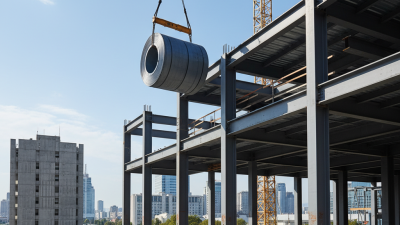
Choosing High Carbon Steel Coil in 2026 means matching measurable performance to the job, not chasing the hardest grade. Carbon content affects hardness, strength, wear resistance, and formability. Yet chemistry alone cannot predict how a coil will behave. Heat treatment, thickness, surface condition, and manufacturing consistency matter too. Small differences show up quickly: a rough edge during slitting, springback after forming, or cracking at a tight bend.
Metallurgist Dr. John Speer’s work on steel processing offers a useful guidepost, paraphrased here rather than presented as a verbatim quotation: “Select steel for its required properties and process route, not its grade name alone.” That distinction is practical. A stamping line needs predictable forming behavior; a wear-resistant component may prioritize hardness and service life. Ask suppliers for the material test certificate, grade specification, dimensional tolerances, and applicable test results. Check whether the coil’s condition suits your downstream process. Verify details, not assumptions.
There is no universal best coil. Not quite. A specification that works for a thick spring component may fail in a thin, tightly formed part. Compare suppliers on traceability, consistency, packaging, and technical support, as well as price. Confirm that quoted properties apply to the supplied coil, not merely to a typical grade. In this guide, we’ll examine the selection factors, supplier questions, and quality checks that help buyers make a defensible choice in 2026. Some trade-offs remain. That deserves a second look.
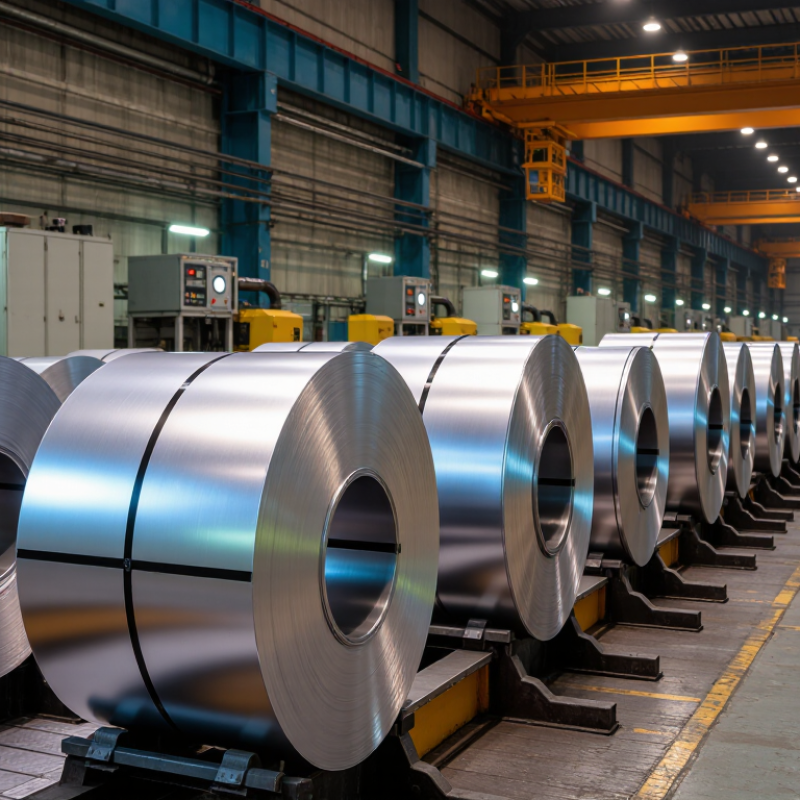
High-carbon steel coil is a product form, not a complete grade definition. Commercially, “high carbon” often means roughly 0.60% carbon or more, but the threshold varies by specification. Chemistry matters. SAE J403 gives SAE 1075 a carbon range of 0.70–0.80%, while SAE 1095 ranges from 0.90–1.03%. Those differences affect hardness potential, formability, and cracking risk during processing. Check the mill test certificate for the heat’s actual chemistry, not just the grade name.
Match the order to the product standard and intended condition. ASTM A684/A684M covers cold-rolled high-carbon steel strip; confirm that the supplier’s coil dimensions, tolerances, surface condition, and temper meet your requirements. SAE J403 addresses chemical composition, but it does not replace a product specification. World Steel Association’s World Steel in Figures 2024 reports 1,892.2 million tonnes of crude steel production in 2023; that broad figure is not high-carbon-coil output, so it cannot establish a particular grade’s availability. Ask for the standard edition, grade, thickness, and certificate before approving a sample. A label alone is not enough. One practical caveat: a grade can meet its chemistry limits and still behave poorly if its processing condition does not suit your forming or heat-treatment route.
How to Choose High Carbon Steel Coil in 2026?
Compare SAE 1060 (0.55–0.65%C) with SAE 1075 (0.70–0.80%C)
Choosing between SAE 1060 and SAE 1075 starts with the part’s job. SAE 1060 has a lower carbon range, which can make it easier to form before heat treatment. SAE 1075’s higher carbon content can support greater hardness after suitable heat treatment. That difference matters for spring parts, blades, and wear-resistant components. But carbon content alone does not predict finished performance. Processing route, thickness, and supplied condition all matter.
Ask for the coil’s material certificate and confirm its grade, thickness, and condition. Check the intended forming steps, too. A tight bend may crack if the selected condition is too hard. A small trial piece can reveal problems before production. It is easy to overlook edge quality; burrs and surface defects may affect later forming or fatigue performance.
Tips: Compare hardness and ductility data for the actual supplied condition, not just the grade name. Confirm test methods with your supplier. If the application needs a precise balance, validate it with sample forming and heat-treatment trials. Even then, results can vary. That uncertainty deserves a place in the specification.
| Comparison Dimension | SAE 1060 | SAE 1075 | What It Means When Choosing Coil |
|---|---|---|---|
| Carbon content | 0.55–0.65% C | 0.70–0.80% C | SAE 1075 has the higher specified carbon range. Higher carbon can support greater hardness and wear resistance after suitable heat treatment, but generally reduces ductility and makes forming and welding more challenging. |
| Typical manganese range | Approximately 0.60–0.90% Mn | Approximately 0.40–0.70% Mn | These are commonly listed SAE/AISI chemistry ranges. Confirm the governing standard and the actual mill test certificate for the coil being purchased. |
| Main selection tendency | Useful where a balance of strength, toughness, and heat-treat response is required. | Often selected when higher achievable hardness or wear resistance is a priority. | Choose by the finished part’s required properties and processing route, rather than carbon content alone. |
| Forming and bending | Formability depends strongly on the supplied condition, thickness, bend radius, and prior processing. | Typically less forgiving in demanding forming operations, particularly in a hardened condition. | For tight bends or extensive stamping, request the specified delivery condition and validate the forming limits with representative material. |
| Heat-treatment response | Can be hardened and tempered; final properties depend on section size, process parameters, and tempering. | Can generally achieve higher hardness than SAE 1060 under comparable, properly controlled heat treatment. | Do not specify a hardness value from grade alone. Define the required condition and verify it through a qualified heat-treatment procedure and testing. |
| Weldability | Welding is difficult compared with low-carbon steels and may require special procedures, preheating, and post-weld treatment. | Generally more difficult to weld than SAE 1060 because of its higher carbon content. | If welding is necessary, have a qualified welding procedure established for the actual thickness, condition, and joint design. |
| Common application examples | Heat-treated components, certain blades, springs, and wear-related parts where the design permits. | Higher-hardness blades, knives, wear parts, and spring-related applications where the required processing is suitable. | These are examples, not guaranteed uses. The required strength, toughness, geometry, and applicable product specification determine suitability. |
| Coil details to confirm | Thickness, width, edge condition, coil weight, surface quality, flatness, delivery condition, tolerances, and applicable chemistry and testing requirements. | Also confirm decarburization limits where surface hardness matters, and check that the coil condition is compatible with slitting, forming, and heat treatment. | |
| Best fit when… | The design needs a high-carbon grade with a comparatively broader balance between hardenability, strength, and toughness. | The design specifically benefits from the higher carbon range and can accommodate more demanding forming or welding constraints. | Compare the finished-part specification, processing cost, scrap risk, and test requirements before choosing a grade. |
Specification note: Chemistry ranges shown are commonly published SAE/AISI grade ranges and should be checked against the current governing standard and purchase specification. Mechanical properties and hardness are condition- and process-dependent; request the material test certificate and verify required properties on the supplied coil.
When evaluating high carbon steel coil, begin with the mill certificate, not a sales description. For SAE 1095, verify that carbon is reported as 0.90–1.03 wt%. The unit matters: wt% means carbon’s share by mass, not a decimal fraction. Check that the certificate’s heat number matches the coil tag and packing records. No match, pause. A correct chemistry result tied to the wrong coil is not useful evidence.
Read whether the value is a ladle, or heat, analysis or a product analysis; they describe different sampling stages. Compare the result with the stated range and ask the mill to clarify missing units, rounded figures, or conflicting entries. Ask before accepting.
A generic “high carbon” label does not confirm SAE 1095. For demanding forming or hardening work, review the remaining chemistry and condition against the purchase specification. Carbon content alone does not predict every outcome; thickness, processing history, and heat treatment also matter.
This check is plain but important. I would still review it twice, because paperwork can look tidy and contain an error. A certificate supports traceability, but it does not replace incoming inspection when the risk warrants one.
Choosing high carbon steel coil starts with the part and forming route, not a catalog grade. Thickness affects press force, springback, and finished-part strength. Even a small thickness shift can change die clearance or leave a bend standing proud. Check the allowed tolerance, not only the nominal value. A sample run helps.
Width should match the tooling layout and required edge trim. Too narrow, and the blank may not cover the die; too wide, and scrap rises. Ask for width tolerance, camber, and edge condition. Burrs or wavy edges can disrupt feeding. Small details matter.
Temper and hardness need to suit the forming operation. A harder coil may hold shape well after simple blanking, but tight bends can crack at the outer radius. Softer material usually forms more easily, though it may spring back or distort. Compare hardness data with tensile strength and elongation; hardness alone does not predict formability. For a new die or complex profile, test a short coil section before ordering production volume. Record the settings and inspect cut edges and bends. The first trial can still surprise you. That is useful evidence, not a reason to guess.
Match coil thickness, width, temper, and hardness to the forming process. The chart shows indicative hardness ranges for common material conditions—not specification limits. Actual values depend on steel grade, thickness, and heat treatment.
Selection guide: For severe forming, consider spheroidized-annealed coil and confirm that its thickness and width suit the part and tooling. For bending or moderate forming, annealed material may be appropriate. Harder, cold-reduced or quenched-and-tempered conditions generally allow less forming; verify the grade, temper, hardness, and dimensional tolerances against the applicable specification before ordering.
When choosing high carbon steel coil in 2026, inspect the surface under bright, angled light. Look for rust, pits, cracks, rolled-in scale, and scratches that could deepen during processing. Check both edges for burrs, waviness, and splitting; these can cause feeding problems or trimming loss. A coil may look clean from the outside, yet hide damage between wraps. Ask for clear photos and agree on acceptable defects before shipment.
Tip: Place a straightedge across a sample sheet and check for gaps, edge lift, and bow. Record the coil’s width, thickness, and flatness against the purchase specification.
World Steel Association data reports 1,892.2 million tonnes of crude steel production in 2023. This figure shows the scale of the industry, not the quality of any individual coil.
Request test records linked to the coil’s heat and batch numbers. Review the chemistry, tensile strength, hardness, and test methods against the specified grade. ASTM A370 describes mechanical testing methods for steel products; ISO 6892-1 covers tensile testing of metallic materials. Confirm sampling direction and acceptance limits with the supplier. A certificate alone is not enough if its identifiers do not match the coil. And paperwork can be incomplete. Check before ordering.