China’s seamless steel pipe industry operates at a scale few markets can match. World Steel Association reported that China produced approximately 1.005 billion tonnes of crude steel in 2024. That figure does not equal pipe output. It does, however, demonstrate China’s deep raw-material and processing base. Reports from Grand View Research and Mordor Intelligence indicate steady global demand for seamless pipe. Their market definitions and forecasts differ. The disagreement matters.
This guide asks: China Top 10 Seamless Carbon Steel Pipe Suppliers? It evaluates manufacturers through measurable signals, rather than promotional rankings. Capacity, mill ownership, heat-treatment control, inspection systems, export experience, and certifications shape the comparison. Product coverage includes carbon steel grades for pressure, oil and gas, boiler, structural, and mechanical applications. API 5L, API 5CT, ASTM, and EN requirements may apply, depending on service conditions. A certificate alone is not proof of consistent quality.
Public company records, supplier catalogs, customs data, and technical documents provide the initial evidence. Field purchasing experience also shows that small details matter: readable heat numbers, stable wall thickness, clean bevels, and dry pipe ends can prevent costly disputes. Buyers should verify current licenses, third-party inspection options, traceability, tolerances, and delivery performance before signing contracts. Some rankings remain imperfect because private suppliers disclose limited operating data. That limitation should remain visible. Use this list as a due-diligence shortlist, not a replacement for engineering review, mill audits, or project-specific approval.
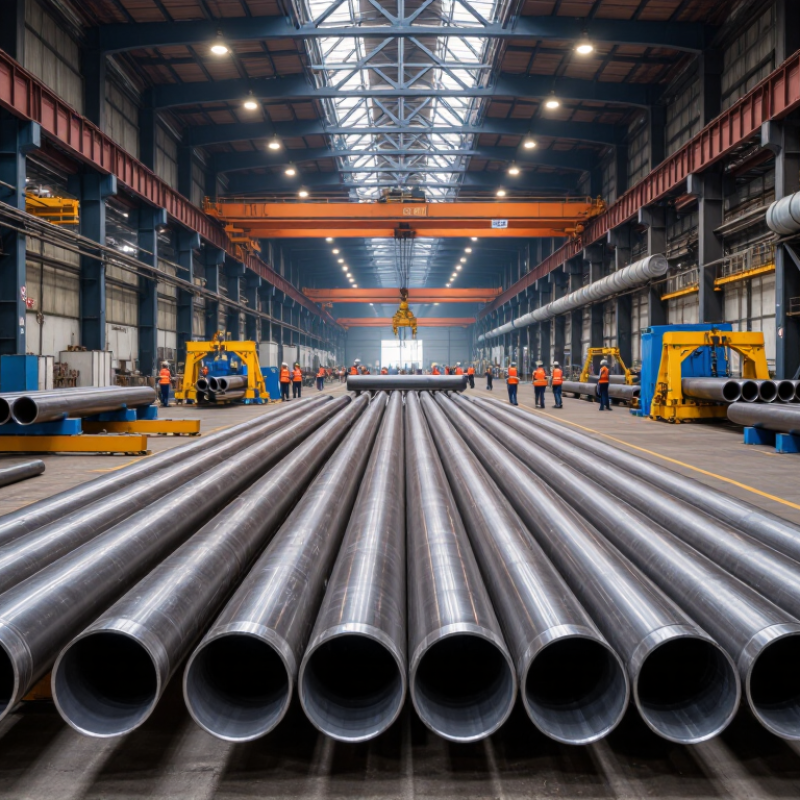
Seamless carbon steel pipes are manufactured from a solid steel billet. The billet is heated, pierced, and rolled into a hollow tube without a welded seam. Some grades receive cold drawing for tighter dimensions and smoother internal surfaces. This process improves resistance to internal pressure, although it does not make every pipe suitable for every service.
The World Steel Association reported about 1.89 billion tonnes of crude steel production worldwide in 2023. That scale supports extensive pipe manufacturing for energy, construction, and industrial equipment.
In practical use, seamless pipes carry oil, gas, water, and steam. They also serve in boiler tubes, heat exchangers, pressure vessels, and high-load structural supports. A pipe may look simple. Its performance depends on chemistry, wall thickness, heat treatment, and testing.
Common purchasing references include ASTM A106 for high-temperature service and API 5L for pipeline applications.
Engineers should verify pressure ratings, temperature limits, corrosion conditions, and inspection requirements before ordering. Mill certificates, hydrostatic testing, and dimensional checks provide useful evidence of quality. Yet, certificates alone are not enough. Poor storage can cause rust, ovality, or damaged ends before installation. Supplier comparisons should therefore examine traceability, production experience, third-party inspection, and delivery consistency, not only price.
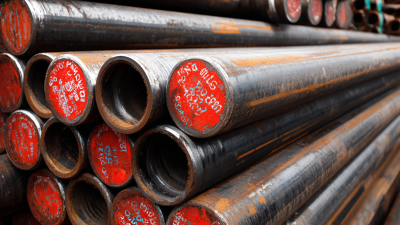
The selection began with practical purchasing needs, not online popularity. We reviewed manufacturing history, production capacity, steel grades, size ranges, and documented delivery performance. Factory experience mattered because consistent pipe quality requires stable control across many production batches.
Each supplier was checked against technical and commercial evidence. We examined mill test certificates, heat-number traceability, dimensional inspection records, hydrostatic testing, and non-destructive testing procedures. Quality systems, laboratory equipment, and worker training also influenced the assessment. Export experience was reviewed through shipment records, packaging details, and responses to specification changes.
Real customer feedback helped test written claims. We compared sample reports with actual inspection practices where access was available. Delivery reliability, complaint handling, communication speed, and quotation accuracy received separate scores. Clear documentation increased confidence. Vague promises did not.
The evaluation was not perfect. Public information can be incomplete, and factory conditions may change after an assessment. A strong website cannot replace production evidence. Scores were therefore balanced across technical capability, quality assurance, service performance, and supply stability. Independent inspections and recent records carried more weight than old certificates. Small differences in scores should not be treated as absolute rankings. A buyer should still verify current capacity, applicable standards, and inspection terms before placing an order.
China’s top ten seamless carbon steel pipe suppliers are best identified through verified production capability, not marketing claims. A reliable supplier should operate traceable mills, qualified heat-treatment lines, and documented inspection systems. Experienced buyers usually compare manufacturers that produce pipes for oil, gas, construction, boilers, and mechanical applications.
Strong candidates can supply common grades such as ASTM A106, ASTM A53, and API 5L, subject to project requirements. They should provide mill test certificates, chemical analysis, tensile results, hydrostatic testing, and ultrasonic inspection records. Consistent outer diameter and wall thickness matter greatly. Small deviations can create serious installation problems. Factory audits, sample orders, and independent inspections offer stronger evidence than website rankings. A fixed top-ten list can become outdated, so procurement teams should reassess capacity, export experience, and recent quality records.
Tips: Request a recent inspection report. Check heat numbers against pipe markings. Confirm packing for sea transport. Ask about tolerance control and claim handling. Do not rely only on the lowest quotation. One weakness remains easy to miss: a supplier may pass sample testing but struggle with large-volume consistency. Review production records, not just certificates.
This chart compares the published minimum tensile-strength requirements of widely used seamless carbon steel pipe grades and specifications in China-related procurement. It provides an objective technical benchmark for evaluating suppliers without displaying company or brand information. Values are shown in MPa.
Comparing China’s top seamless carbon steel pipe suppliers requires more than reading a product catalogue. In supplier audits, I examine chemical reports, heat numbers, and ultrasonic testing records. A reliable mill should trace each pipe from billet to final inspection. Wall thickness matters too. Small variations can affect pressure performance and installation costs. Samples should match the stated grade, outside diameter, and tolerance.
Quality begins with process control. Suppliers using controlled piercing, heat treatment, and calibrated straightening equipment usually provide more stable results. I also check rejection rates and corrective-action records. These details reveal factory discipline. A clean workshop helps, but it does not prove consistency. That assumption needs challenging.
Capacity must be measured carefully. A large monthly figure may include several production lines and different steel grades. Buyers should confirm actual seamless pipe output, furnace capacity, storage space, and delivery schedules. During factory visits, visible bundles, marked crates, and active inspection stations provide useful evidence. Still, production claims can change during peak seasons.
Certification adds another layer of confidence. Relevant quality systems, product certificates, and independent inspection reports should support the purchase. Certification alone is not enough. The issuing body, validity period, and tested scope deserve verification. I prefer suppliers that accept third-party inspection before shipment. It costs more. It reduces uncertainty. Missing documentation can delay customs clearance or project approval, even when the pipes look perfect.
Choosing a Chinese seamless carbon steel pipe supplier requires more than comparing price lists. Buyers should verify manufacturing capability, product standards, and delivery reliability. Ask whether the factory produces the required grades, outside diameters, wall thicknesses, and heat-treatment conditions in-house. A supplier should provide mill test certificates with heat numbers, chemical results, tensile data, and hydrostatic or ultrasonic testing records.
Practical inspection matters. Request recent production photos, packing details, and sample documents before placing an order. During a factory audit, check furnace records, calibration labels, warehouse separation, and pipe surface conditions. Bundles should carry clear markings that match the certificates. Small gaps in traceability can create expensive problems later. They may not appear during loading.
Experience also shows that communication speed is not enough. The sales team should understand technical drawings, applicable standards, tolerances, inspection plans, and coating or end-finishing requirements. Confirm who pays for third-party inspection and how nonconforming pipes will be handled. Delivery promises deserve evidence, such as production schedules and shipping records. The cheapest quotation may exclude testing, packing, or inland transport. That is easy to miss. Buyers should compare the complete cost and risk, not only the unit price. Some suppliers answer every question confidently, yet provide vague evidence. That should invite a second review.
| No. | Evaluation Dimension | Relevant Standard or Benchmark | What Buyers Should Verify | Procurement Importance |
|---|---|---|---|---|
| 1 | Product Standard Coverage | ASTM A106/A106M, ASTM A53/A53M, API 5L, EN 10216-1 or the project-specified standard | Confirm that the supplier can manufacture the exact grade, size range, manufacturing route and inspection requirements stated in the purchase specification. | Critical |
| 2 | Material Grade and Chemistry | Heat-specific chemical composition must comply with the selected material standard. | Request heat numbers, ladle analysis and a material test certificate. Check carbon, manganese, phosphorus, sulfur and any specified alloying elements against the standard limits. | Critical |
| 3 | Dimensions and Tolerances | Outside diameter, wall thickness, length, straightness and ovality tolerances are defined by the applicable standard or purchase order. | Approve a dimensional inspection plan covering outside diameter, wall thickness, length, end condition and weight before production. | Critical |
| 4 | Manufacturing Process | Seamless pipe is produced without a longitudinal weld; common processes include hot-finished and cold-drawn production. | Confirm the billet source, piercing process, heat-treatment route and whether the process matches the required mechanical and dimensional performance. | High |
| 5 | Mechanical Properties | Yield strength, tensile strength, elongation and, where specified, impact toughness must meet the applicable standard. | Review test results by heat and product size. Do not rely only on generic catalog values or an undated certificate. | Critical |
| 6 | Non-Destructive Testing | Hydrostatic testing and ultrasonic, eddy-current or other NDT may be required depending on the standard and application. | Specify the test method, acceptance criteria, test coverage and whether reports must be reviewed by an independent inspection agency. | Critical |
| 7 | Quality Management System | ISO 9001 certification can support process control, but it does not replace product-specific inspection. | Verify certificate validity, certification scope, issuing body and traceability procedures. Request recent audit or quality records when appropriate. | High |
| 8 | Documentation and Traceability | EN 10204 Type 3.1 is commonly used for inspection certificates identifying product and test results. | Require heat-number traceability from the pipe bundle and markings to the original test certificate, packing list and inspection report. | Critical |
| 9 | Export Packing and Marking | Packing should protect pipe ends, surfaces and identification during handling and ocean transport. | Define bundle weight, steel or plastic strapping, end protection, rust prevention, container loading, markings and photographic evidence before shipment. | High |
| 10 | Commercial Terms and Inspection Control | Incoterms® 2020, payment terms, agreed inspection point and documented non-conformance procedure should be stated in the contract. | Compare total landed cost rather than unit price alone. Include delivery schedule, liquidated damages where appropriate, pre-shipment inspection rights and warranty obligations. | Critical |
Note: The standards and verification points above are general procurement references. The applicable requirements should always be confirmed against the project specification, end use, governing code and purchase contract.