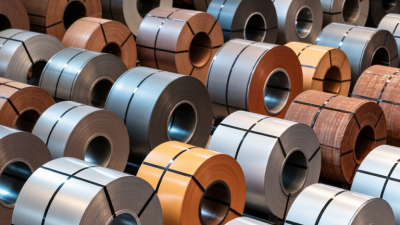
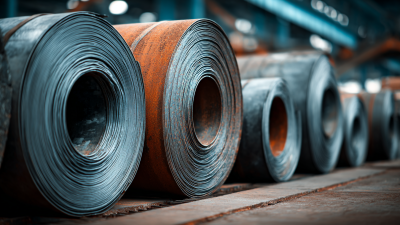
Choosing among China’s Carbon Steel Floor Coils manufacturers requires more than comparing prices. Buyers should confirm how each supplier defines its product, since “floor coil” can refer to material intended for different flooring and fabrication uses. Details matter. Request the steel grade, thickness and width tolerances, mechanical properties, surface condition, and coil dimensions. These specifications help determine whether a coil suits floor decking, formed panels, or another application.
Reliable evaluation also depends on evidence. Ask for current test documents, batch traceability, packaging details, and a clear process for handling quality concerns. Where practical, review a sample or arrange an independent inspection before a large order. A polished catalog is not proof of consistent production. Real performance becomes clearer when paperwork, measured dimensions, and the delivered coil agree.
This guide introduces factors to consider when assessing Chinese manufacturers, including production capability, quality control, communication, and export support. It does not treat any supplier as “best” without verified, comparable evidence. Published specifications can look complete, yet still leave important questions unanswered. For example, buyers may need to clarify how tolerances are measured or how coils are protected during transport. Careful checks take time. They can also prevent avoidable delays, rework, and material mismatch. The most suitable partner is the one that can document its claims and respond clearly to the requirements of your project.
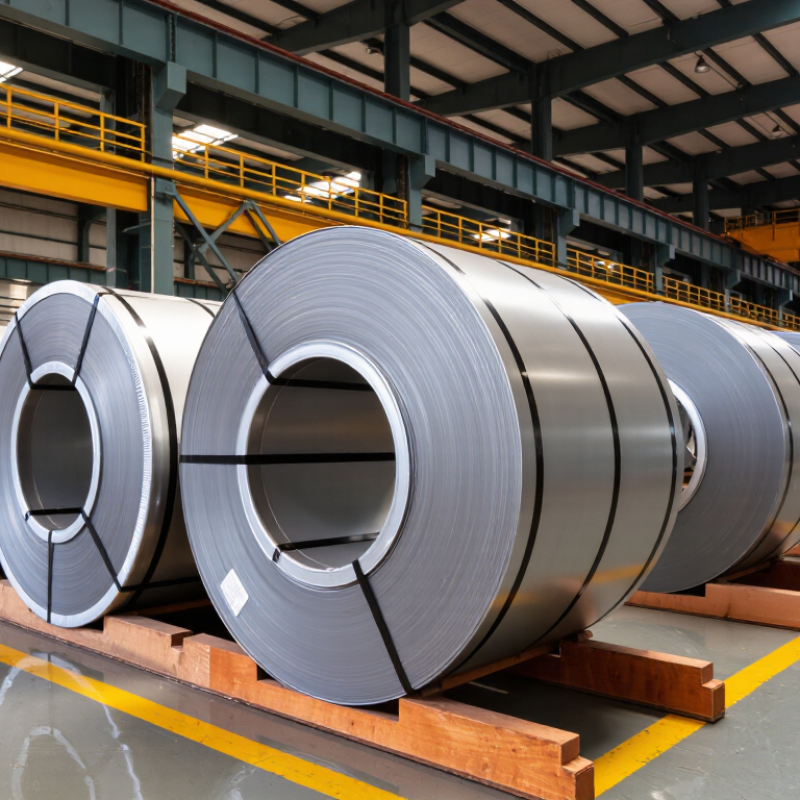
Carbon steel floor coils are flat steel wound into rolls, then cut or roll-formed into floor decking, panels, or other floor components. “Floor coil” describes an intended use, not one fixed steel grade. The label can be confusing. Buyers should check the specification, thickness, width, strength, and surface condition rather than rely on the name alone.
A practical classification starts with carbon content. Low-carbon steel, often around 0.05–0.25% carbon, is commonly selected for forming because it bends readily. Higher-carbon grades can offer greater hardness, but may be less forgiving during shaping. Exact ranges vary by specification. Coils are also classified by manufacturing route and grade: ASTM A1011/A1011M covers hot-rolled sheet and strip, while ASTM A1008/A1008M covers cold-rolled sheet. Structural grades are chosen by required strength; commercial grades generally prioritize forming and fabrication.
Surface treatment adds another distinction. Coils may be supplied uncoated, pickled, or metallic-coated, depending on fabrication and exposure needs. Small details matter: rust at an unprotected slit edge can affect storage and later finishing. For industry context, the World Steel Association’s World Steel in Figures 2024 reports global crude steel production of 1,892.2 million tonnes in 2023. That scale does not define floor-coil quality; the applicable grade and mill test certificate do.
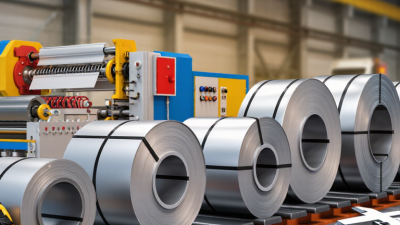
Carbon steel floor coils are flat-rolled carbon steel wound into coils for processing into products such as floor decking. A common way to classify carbon steel is by carbon content: low-carbon steel is typically below 0.30%, medium-carbon steel is about 0.30–0.60%, and high-carbon steel is above 0.60%. Classification limits vary by standard and specification; the chart shows typical ranges, with steel containing up to about 2.1% carbon.
Carbon-steel floor coils are rolled steel supplied for cutting and forming into floor plates, access ways, and platform components. Many feature raised patterns that help footwear grip, while the base steel offers useful strength and can be fabricated to suit different layouts. Pattern height, sheet thickness, and surface condition all matter. A textured plate is not automatically slip-proof, especially when wet or oily.
World Steel Association’s World Steel in Figures 2024 reports global crude steel production of 1,888.2 million tonnes in 2023. That figure describes the scale of steelmaking, not the quality of any individual floor coil. Buyers still need mill test documents confirming grade, thickness, and mechanical properties. In service, floor coils commonly become warehouse walkways, stair treads, vehicle decks, and industrial platforms. Coatings can help limit corrosion, but damaged edges and trapped moisture need attention. Small details matter. A useful specification should state the intended load, environment, and required surface pattern; otherwise, selection can rely too heavily on appearance. Even experienced teams sometimes overlook drainage. The result can be a durable-looking floor that needs more maintenance than expected.
Chinese manufacturers begin with steel slabs, reheating them before hot rolling reduces them to a controlled thickness. High-pressure water removes surface scale, while finishing stands refine the strip’s dimensions and surface. The strip is then coiled while hot. Temperature matters: uneven cooling can create differences in hardness and shape. Small details matter.
The World Steel Association’s World Steel in Figures 2024 reports that China produced 1,019.1 million tonnes of crude steel in 2023, out of 1,892.2 million tonnes worldwide. That scale supports extensive processing capacity, but it does not guarantee consistent coil quality.
For tighter thickness and smoother surfaces, producers may pickle hot-rolled strip, cold-roll it, then anneal and lightly temper it. Where a floor application calls for a raised pattern, the surface may be embossed or rolled with a patterned work roll. Slitting and edge trimming follow, with checks for width, flatness, coating condition, and visible defects. A bright coil is not necessarily a dependable one. Buyers should review mill test certificates and confirm the actual thickness, surface finish, and tolerances against the order. Even careful lines can leave occasional waviness or handling marks; inspection standards and packaging deserve attention too.
Reliable carbon steel floor coils start with a stated grade and a measurable acceptance plan. Buyers should confirm the applicable product specification, thickness tolerance, width, flatness, and surface condition before production. Requirements may follow ASTM or EN standards, but the exact grade and edition matter. A certificate that only says “compliant” is not enough. Ask for heat-level chemistry and mechanical results, including yield strength, tensile strength, and elongation. Keep each result traceable to its coil.
An EN 10204 type 3.1 inspection document can connect test results to a specific coil, while ISO 9001 describes a quality-management system rather than certifying each coil. Check that coil tags, packing lists, and test reports share the same identification number. Production controls should include calibrated gauges, documented sampling, and checks for edge damage or uneven winding. A slight thickness drift can change profile depth and fit at the jobsite. If the coil is coated, specify coating mass and test method separately. Paperwork helps, but it cannot reveal every handling defect; receiving inspection still matters. In practice, standards need careful interpretation, and suppliers may overlook small differences between editions. That deserves a second look.
| Quality Dimension | Relevant Standard or Document | Production and Inspection Data | Acceptance Basis |
|---|---|---|---|
| Product specification and grade | ASTM A786/A786M for steel floor plates, where applicable; EN 10025-2 for specified non-alloy structural steel products | Steel grade, product form, delivery condition, and any agreed supplementary requirements are identified in the order and material documents. | Conformance to the exact standard edition and grade stated in the contract; scope should be checked because standards do not apply to every floor-coil product. |
| Thickness, width, and dimensional tolerances | EN 10051 for continuously hot-rolled sheet, plate, and strip, where applicable; ASTM A568/A568M for covered hot-rolled or cold-rolled steel sheet | Measured thickness and width, coil identification, and dimensional inspection records. | Order requirements and the applicable standard’s tolerances for the product type and dimensions. |
| Surface pattern and appearance | Product specification and approved order requirements | Pattern continuity, visible defects, edge condition, and surface condition are checked during production or final inspection. | Agreed pattern and appearance requirements; defect limits should be defined in the purchase specification. |
| Chemical composition | Specified steel grade standard; heat analysis and, where agreed, product analysis | Heat number, reported chemical elements, and traceability to the production batch. | Composition limits for the ordered grade and any contractual supplementary limits. |
| Tensile properties | ISO 6892-1 or ASTM A370, as specified for testing | Tensile strength, yield strength or proof strength, and elongation, when required by the product specification. | Grade-specific limits and test conditions stated in the applicable product standard or purchase order. |
| Hardness | ISO 6506-1 (Brinell) or ISO 6507-1 (Vickers), when specified | Hardness readings and test location recorded when hardness testing is part of the agreed inspection plan. | Specified grade or purchaser requirements; hardness is not a universal acceptance test for every floor coil. |
| Flatness, shape, and coil condition | Applicable product standard and agreed dimensional requirements | Checks for flatness or shape where relevant, coil winding condition, telescoping, and edge damage. | Contractual limits and the relevant standard’s provisions for the ordered product. |
| Inspection certificate and traceability | EN 10204, including Type 3.1 inspection documents when specified | Certificate links test results and heat or batch identification to the supplied material. | Document type, inspection scope, and traceability details stated in the contract; a certificate does not replace product-standard compliance. |
| Quality management system | ISO 9001 | Documented quality-management processes, controlled production records, and corrective-action procedures. | Verify that certification is current and its stated scope covers the relevant manufacturing activities; it is not a product-grade certification. |
| Environmental management | ISO 14001 | Environmental management processes and controls within the certified organization’s stated scope. | Check certificate validity and scope; this certification does not establish the steel coil’s mechanical or chemical properties. |
| Occupational health and safety management | ISO 45001 | Management processes for occupational health and safety within the certified organization’s stated scope. | Check certificate validity and scope; it is a management-system certification, not a product conformity certificate. |
| Laboratory competence | ISO/IEC 17025 | Testing laboratory competence for the methods and activities listed in its accreditation scope. | Confirm the relevant test method is within the laboratory’s accredited scope when accredited testing is required. |
Note: Standards and certifications are not interchangeable. Confirm the latest applicable edition, product scope, grade, testing frequency, tolerances, and required inspection documents in the purchase agreement.
When comparing Chinese carbon steel floor coil manufacturers, begin with the specification, not the quoted price. Confirm thickness, width, coil weight, steel grade, and whether the surface pattern must meet a particular drawing. Ask for recent inspection records showing chemical composition and mechanical properties. Check that the coil number on each record matches the product label. Small details matter.
Compare how each mill controls thickness variation, flatness, pattern consistency, and edge condition. Request samples from more than one production run if possible; a single polished sample may not reflect routine output. Ask how defects are recorded and what happens when a batch falls outside the agreed tolerance. Clear answers are useful. Vague promises are not.
Packaging and dispatch deserve attention, too. Look for firm strapping, protected coil edges, and moisture-resistant wrapping suited to the shipping route. Review lead times against actual production capacity, not just a sales estimate. If available, speak with a buyer who has received repeat orders. One comparison sheet is never perfect, and the lowest bid can still be costly if quality varies. A factory visit or independent inspection may help resolve doubts, though neither guarantees every coil will be identical.