Carbon Steel Checkered Coil is valued for its raised pattern, practical durability, and grip underfoot. It appears in vehicle floors, walkways, platforms, and industrial enclosures. Yet a familiar pattern does not guarantee consistent quality. Coil thickness, surface regularity, edge condition, and packaging can all affect fabrication and delivery.
This guide introduces seven manufacturers for buyers comparing supply options. It considers product range, published specifications, quality documentation, production capabilities, and access to technical support. Ask each supplier about coil width, thickness tolerance, pattern height, steel grade, and available test records. Requesting a sample or current product sheet can help clarify details before a large order. Small differences matter.
The right choice depends on the job. A fabricator may prioritize steady dimensions and clean edges, while a distributor may focus on stock availability and dependable lead times. This shortlist is a starting point, not a substitute for checking current specifications and service terms directly. Still, no shortlist is perfect. Supplier capabilities change, and a polished catalog may leave practical questions unanswered. Compare evidence, discuss your application, and confirm that the coil suits your equipment and finishing requirements.
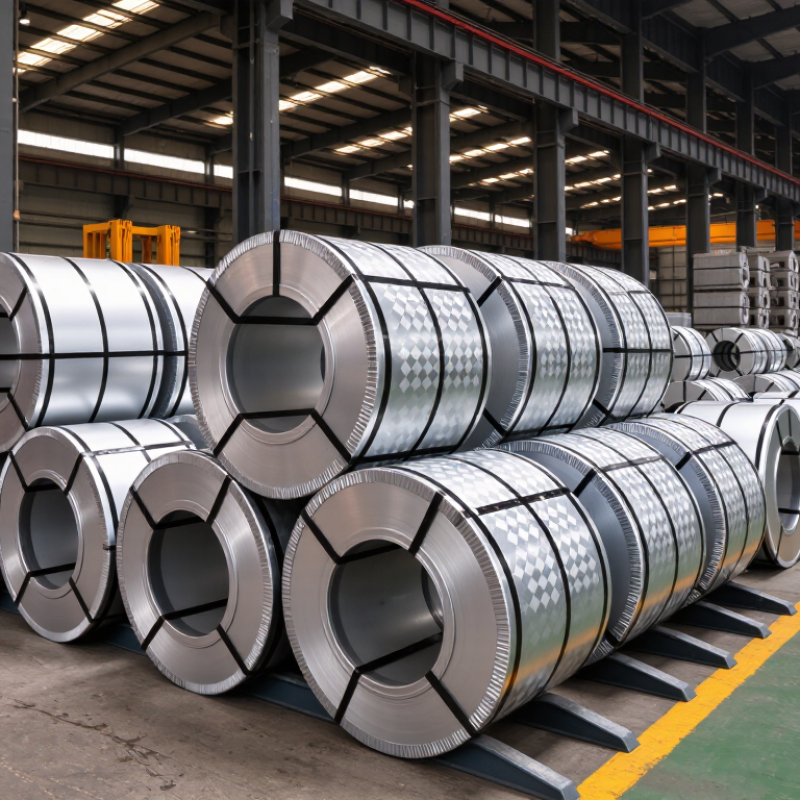
Carbon steel checkered coil is made mainly from iron, with carbon and small amounts of elements such as manganese. Carbon content influences hardness and strength, while the finished properties also depend on grade, thickness, and rolling conditions. A raised pattern is rolled into the surface to provide grip and a recognizable textured finish. Pattern height and spacing can vary. Details matter.
The checkered surface is commonly used on walkways, platforms, stair treads, and equipment floors where traction is useful. Its raised diamonds or similar shapes can help reduce slipping, but they do not make a surface slip-proof, especially when oil, ice, or fine dust is present. The pattern may also collect dirt in corners, so cleaning access deserves attention during design.
Carbon steel generally offers useful strength and can be cut, formed, or welded when the selected grade and fabrication method are suitable. However, the patterned face may affect handling and fit-up, and weld areas can need extra finishing. The material is not inherently corrosion-resistant. Coatings or other protection may be appropriate in damp or outdoor settings, but they can wear at raised edges. That trade-off is easy to overlook. Check the coil’s grade, dimensions, pattern, and surface condition against the intended application before purchase.
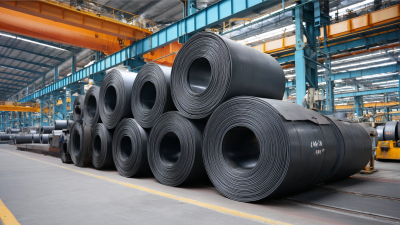
Checkered carbon steel coil starts as a heated slab, which passes through rolling stands until it reaches the required base thickness. Patterned rolls then press raised shapes into the surface. The design must remain clear without making the sheet difficult to level or coil. After cooling, operators inspect the strip and wind it under controlled tension. A small wave at the edge can become a costly handling problem later.
Evaluation combines measurements and practical inspection. Technicians check base-metal thickness, pattern height, width, coil weight, and edge condition. Surface checks look for scale, scratches, uneven patterning, and cracks. Samples may undergo tensile testing to assess strength and elongation. ASTM A786/A786M offers a relevant specification for hot-rolled floor plate, though buyers should confirm how it applies to their coil order. For industry context, World Steel Association’s World Steel in Figures 2024 reports 1,888.2 million tonnes of global crude steel production in 2023. That scale makes consistent inspection essential, but it does not guarantee an individual coil’s quality.
Tips: Request a mill test certificate and agree on measurement points before production. Ask whether thickness refers to the base metal or includes the raised pattern. Photograph the coil edges on receipt. Easy to miss. A checklist helps, though it cannot replace careful sampling.
When comparing carbon steel checkered coil manufacturers, start with product consistency, not catalogue breadth. Request the stated base-metal thickness, coil width, pattern height, and tolerance range for each grade. Small details matter. A raised pattern can vary across the sheet, so inspect a physical sample under steady light. Check whether the supplier records heat numbers and provides mill test documents linked to the delivered coil.
A capable producer should explain its rolling and leveling controls in plain terms. Ask how it checks flatness, edge waviness, surface dents, and thickness at several points across the width. One certificate alone is not enough; batch traceability and repeatable inspection records make comparisons more dependable. If coating or oiling is specified, confirm the treatment and how coils are wrapped for transit.
Service matters after production. Compare realistic lead times, minimum order quantities, cutting options, and procedures for handling nonconforming material. I would not treat the lowest quote as the best value without checking scrap risk and packaging quality. Those checks are easy to overlook. Even careful comparisons leave some uncertainty: handling at the destination can still affect coil edges and surface condition.
ASTM A36 mechanical-strength reference values (MPa) provide a generic benchmark when reviewing carbon steel products. They are not a universal specification for checkered coil; confirm the applicable standard, product form, thickness, and mill test certificate for each offer.
ASTM A36 reference: minimum yield strength 250 MPa and tensile strength range 400–550 MPa for common plate thicknesses. Check the current standard and thickness-specific requirements before comparing supplier specifications.
A large integrated producer can offer steady volumes, broad coil widths, and controlled rolling schedules. Its scale helps with repeat orders, though minimum quantities may be high. A regional mill may ship faster to nearby buyers and adjust delivery lots. Check its surface consistency across multiple coils, not just one sample.
A precision-focused manufacturer typically emphasizes uniform tread height and thickness control. A project-oriented producer may support custom gauges or slit widths, but confirm tolerances in writing. A service-center-led manufacturer can provide cut-to-length sheets and practical stock options. An export-focused producer should document coil weight, packing, and inspection results clearly. A smaller flexible mill may respond quickly to changing orders, but its capacity deserves careful review. No profile is perfect; production claims need evidence.
Tips: Request a recent mill test certificate, a coated or uncoated sample as applicable, and a clear tolerance sheet. Compare edge condition and pattern depth. Small differences can matter during fabrication.
The profiles below summarize common carbon steel checkered coil product and purchasing specifications. They are representative market profiles, not verified claims about individual manufacturers; confirm availability, tolerances, and applicable standards directly with suppliers.
| Profile | Typical product focus | Common specification range | Possible grade references | Pattern and finish options | Typical applications |
|---|---|---|---|---|---|
| Profile 1 General-purpose supply |
Carbon steel checkered coil for routine fabrication and flooring orders. | Thickness, width, and coil weight depend on the mill and order; confirm the dimensional range and tolerances before purchase. | Grade selection may be specified against standards such as ASTM A36, EN 10025-2 S235JR, JIS G 3101 SS400, or GB/T 700 Q235B, subject to equivalence checks. | Raised tear-drop, diamond, or other mill patterns; as-rolled or oiled surface may be available. | Walkways, workshop floors, stairs, and general-purpose platforms. |
| Profile 2 Construction-oriented supply |
Checkered material intended for building, structural, and site-fabrication needs. | Order-specific thickness and width; request the coil’s actual dimensions, mass, and dimensional tolerances. | Common structural-grade references include ASTM A36, EN 10025-2 S235JR, and JIS G 3101 SS400; verify the required product standard and certificate. | Pattern geometry and surface condition vary by producer; confirm pattern height and surface requirements in the purchase specification. | Building platforms, access walkways, stair treads, and equipment floors. |
| Profile 3 Heavy-duty flooring supply |
Thicker checkered products for applications where a more substantial floor plate is required. | Thickness and coil format are mill-dependent; confirm whether the required gauge is available as coil or only as cut sheet. | Carbon steel grades may be selected from applicable structural or general-purpose standards; grade equivalence should be agreed in writing. | Raised anti-slip pattern; uncoated, oiled, or subsequently coated material depending on the order. | Industrial floors, loading areas, machine platforms, and maintenance walkways. |
| Profile 4 Slitting and cut-to-length supply |
Coil supply with downstream processing to meet customer width or length requirements. | Finished dimensions depend on the parent coil and processing equipment; confirm edge condition, length tolerance, and packaging. | Specify the required grade and standard on the order; ask for a material test certificate where required. | Pattern and coating options depend on the source coil and processing route. | Fabrication shops, flooring converters, and projects requiring tailored blanks. |
| Profile 5 Export-order supply |
Orders prepared to buyer-defined specifications, documentation, and shipping requirements. | Dimensions and coil mass are agreed per contract; confirm packing, marking, and shipment protection before dispatch. | ASTM, EN, JIS, and national-standard references may be requested, but compliance must be confirmed for the specific product and order. | Surface condition, edge preparation, and marking can be set in the purchase specification. | International fabrication, construction, and industrial procurement. |
| Profile 6 Custom-specification supply |
Made-to-order supply based on specified grade, dimensions, pattern, and inspection needs. | Availability is subject to production capability and minimum order quantities; obtain written confirmation of every critical tolerance. | The buyer should state the governing standard, grade, and any supplementary requirements rather than relying on grade-name equivalence alone. | Pattern, finish, and any downstream coating should be specified and approved with a sample or agreed description. | Specialized platforms, project fabrication, and non-standard procurement. |
| Profile 7 Service-center-supported supply |
Stocked or processed material supplied through a service center or distribution channel. | Stock dimensions, processing, and lead times vary by location; check current availability and the traceability of the supplied material. | Request the grade, applicable standard, and certificate details for the actual batch being supplied. | Options depend on available inventory and service-center processing. | Replacement material, smaller fabrication orders, and regional project supply. |
Checkered carbon-steel coil is used for stair treads, access platforms, truck floors, and factory walkways. The raised pattern improves grip, but it does not make a surface slip-proof, especially when oily or wet. The World Steel Association’s World Steel in Figures 2025 reports 1,882.6 million tonnes of crude steel production in 2024. That scale matters: consistent grades and traceable coil records help buyers compare supply, not just price.
For patterned floor plate, ASTM A786/A786M is a relevant specification; ASTM A1011/A1011M covers hot-rolled carbon-steel sheet and strip. Confirm which standard applies to the product being quoted. Details matter. Ask for the mill test certificate, steel grade, coil width, base-metal thickness, and dimensional tolerances. Also clarify whether quoted thickness excludes the raised pattern. That detail gets missed. For welded platforms, verify the grade suits the design and fabrication process; a pattern alone says little about strength.
Before ordering, request sample photos or inspect a sample for uneven embossing, edge damage, rust, and coil telescoping. Check packaging and storage plans too, particularly for humid warehouses. Certificates help, but they cannot reveal every handling mark or surface variation. A small trial order can expose problems, though it adds time and cost. Compare suppliers using the same written specification, including pattern type, thickness basis, coil weight, and acceptable surface condition.